“Does AI Policy Really Matter in 2026? Here’s the Truth”
- David Ruttenberg
- Feb 4
- 5 min read

As a parent first, this stuff doesn't feel abstract to me. Our daughter, Phoebe, is 23. She's autistic, has ADHD, and lives with epilepsy. We've done the diagnoses, the therapies, the ER visits, the long nights, the two craniotomies. So when I say “AI policy,” I’m not thinking about headlines. I’m thinking about real systems that make real decisions about real lives (Parliamentary Office of Science and Technology, 2023).
Let me be blunt with you.
If you're still asking whether AI policy matters in 2026, you're already behind. Way behind. Dangerously behind.
The question isn't whether policy matters anymore. That debate is over. Dead. Buried. The real question is whether you're prepared for the avalanche of regulations that are crashing down on organizations right now, this very moment, while you're reading this post.
Here’s the truth nobody wants to hear: 2026 is the most consequential year for AI regulation in human history. And most organizations are sleepwalking into disaster.
The Age of Enforcement Has Arrived
For years, AI policy felt theoretical. Abstract. Something for lawyers to worry about “someday.” Well, someday is today.
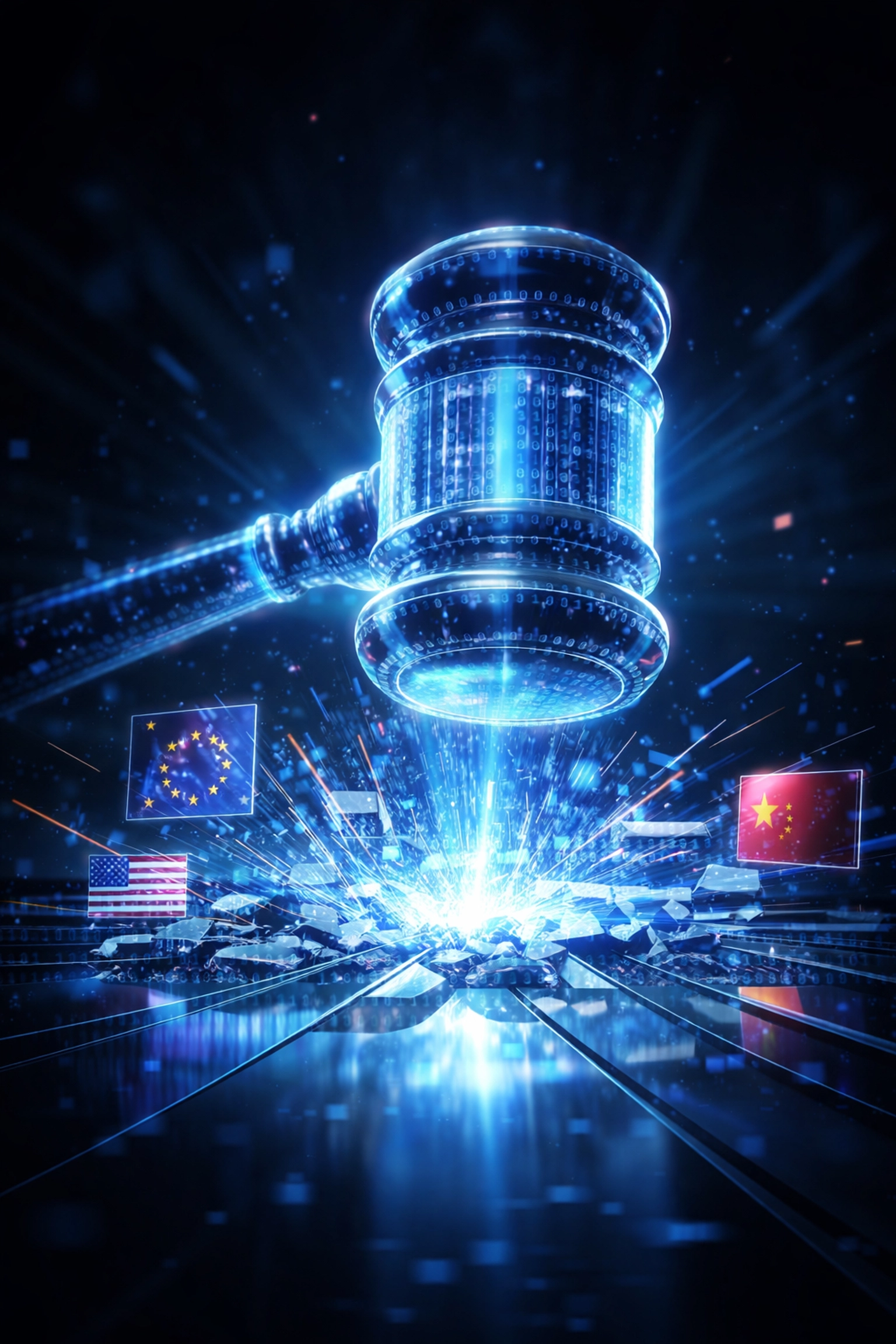
California’s common pricing algorithm prohibition became effective January 1, 2026 (Council on Foreign Relations, 2025). The EU AI Act’s high-risk requirements take full effect in August with penalties up to €35 million: or 7 percent of global turnover, whichever hurts more. China’s amended Cybersecurity Law became enforceable on January 1, explicitly referencing AI systems.
No warnings. No grace periods. No excuses.
This isn't regulatory theater anymore. This is real enforcement with real teeth and real consequences for organizations that haven't been paying attention.
The Patchwork Nightmare
Here's where it gets even messier.
In the United States, there's no unified federal AI policy. Instead, we have a chaotic patchwork of state-level regulations that would give any compliance officer nightmares. Illinois already requires employers to disclose AI-driven hiring decisions (Council on Foreign Relations, 2025). Colorado's comprehensive AI Act goes into effect in June. California's AI Transparency Act mandates content labeling by August.
Illinois. Colorado. California. New York. Texas. The list keeps growing.
The Trump administration is actively working to establish a national AI policy framework, arguing that “50 discordant State ones” threaten U.S. competitiveness (White House, 2025). But until federal preemption happens: if it happens: organizations operating across state lines face a compliance labyrinth that's expensive, confusing, and utterly exhausting.
As someone who has spent years researching the intersection of technology and human wellbeing, particularly in my work on sensory-inclusive assistive technologies (Ruttenberg, 2025a), I've seen firsthand how policy gaps can leave vulnerable populations behind. When regulations are fragmented, inconsistent, or poorly designed, it's not just businesses that suffer: it's the people these technologies are supposed to serve.
The Global Stakes Are Astronomical
Let's zoom out for a moment.
AI policy in 2026 isn’t just about compliance checkboxes. It’s about geopolitical power. Economic dominance. The future of innovation itself.
According to the Council on Foreign Relations (2025), “Decisions made in the coming year will help determine where responsibility, power, and opportunity ultimately concentrate in the AI era.”
Read that again. Let it sink in.
The regulatory landscape differs dramatically across regions. The EU has adopted a rights-based framework that prioritizes human dignity. China has implemented a state-centric model focused on social stability. The United States is caught somewhere in between: celebrating innovation while scrambling to address mounting concerns about bias, privacy, and harm.

U.S.-China competition over AI dominance hinges partly on export controls and regulatory choices. Decisions about chip export restrictions could affect China’s AI computing power for years to come (Council on Foreign Relations, 2025). This isn’t corporate strategy. This is economic warfare.
Why Ethical AI Is the Only Path Forward
Here's what frustrates me most about the “does policy matter” conversation: it completely misses the point.
Policy matters because ethical AI matters. Full stop.
In my doctoral research at UCL, "Towards technologically enhanced mitigation of autistic adults' sensory sensitivity experiences and attentional, and mental wellbeing disturbances" (Ruttenberg, 2025b), I explored how technology can either amplify human suffering or alleviate it. The difference often comes down to design choices: choices that are increasingly shaped by regulatory requirements.
When we talk about AI policy, we're really talking about who gets protected. Whose interests are prioritized. Whose voices are heard. My work on the Parliamentary Office of Science and Technology briefing on invisible disabilities (POSTnote 689, 2023) highlighted how easily neurodivergent individuals can be overlooked by systems designed without their needs in mind.
Ethical AI isn't just a compliance checkbox. It's a commitment to building technology that serves everyone: not just the majority, not just the profitable demographics, but everyone.
The Cost of Doing Nothing
Let me paint you a picture of what happens when organizations ignore AI policy in 2026.
Fines. Lawsuits. Reputational damage. Customer exodus. Talent flight. Regulatory investigations. Public relations meltdowns. Board-level panic.
Does that sound dramatic? Good. It should. Because this is not a policy memo. This is a fire alarm.
The EU AI Act alone can levy penalties up to 7 percent of global annual turnover (Council on Foreign Relations, 2025). For a company with $10 billion in revenue, that's a $700 million fine. For violations. Of policies. You didn't think mattered.
Still think AI policy is optional?

What Smart Organizations Are Doing Right Now
The organizations that will thrive in this new regulatory environment aren't waiting for clarity. They're building ethical AI practices into their DNA today.
They're conducting AI audits. Documenting decision-making processes. Implementing bias detection systems. Training their teams on compliance requirements. Building relationships with regulators rather than waiting to be investigated.
They're treating AI policy not as a burden but as a competitive advantage. Because here's the truth that forward-thinking leaders understand: in a world where trust is currency, ethical AI is the best investment you can make.
The Bottom Line
Does AI policy matter in 2026?
It's not just important. It's existential.
The regulatory wave isn't coming. It's here. It is slamming into budgets, roadmaps, reputations. It is shredding the teams that stalled, sparing the teams that moved.
Organizations that adapt will lead. Organizations that resist will bleed. Organizations that ignore will fail.
The choice is yours. But the clock is ticking. The regulations are live. The enforcement is real.
What are you going to do about it?
Ready to build AI systems that are ethical, compliant, and human-centered? Connect with me to explore how neuroscience-informed design can help your organization navigate the 2026 regulatory landscape.
Dr David Ruttenberg PhD, FRSA, FIoHE, AFHEA, HSRF is a neuroscientist, autism advocate, Fulbright Specialist Awardee, and Senior Research Fellow dedicated to advancing ethical artificial intelligence, neurodiversity accommodation, and transparent science communication. With a background spanning music production to cutting-edge wearable technology, Dr Ruttenberg combines science and compassion to empower individuals and communities to thrive. Inspired daily by their brilliant autistic daughter and family, Dr Ruttenberg strives to break barriers and foster a more inclusive, understanding world.
References
Council on Foreign Relations. (2025). AI regulation in 2026: The year enforcement gets real. https://www.cfr.org/
Parliamentary Office of Science and Technology. (2023). Invisible disabilities (POSTnote 689). UK Parliament.
Ruttenberg, D. (2025a). Multi-sensory assistive wearable technology [Patent application]. UK Intellectual Property Office.
Ruttenberg, D. (2025b). Towards technologically enhanced mitigation of autistic adults’ sensory sensitivity experiences and attentional, and mental wellbeing disturbances [Doctoral thesis, University College London]. https://discovery.ucl.ac.uk/id/eprint/10210135/
White House. (2025). Executive actions on artificial intelligence policy. https://www.whitehouse.gov/


Comments