The Future of Workplace Wellness: Can Wearables Bridge the Inclusion Gap?

I’m writing this first as a parent. Our daughter, Phoebe (23), lives with autism, ADHD, and epilepsy—and our family’s “wellness journey” has included diagnoses, ER visits, and two craniotomies. So when a workplace pitches “wellness” through a wrist-worn device, I don’t hear a product demo. I hear a promise: Will this actually help real people live and work better—or will it simply measure them more efficiently?
Wearable technology is everywhere. From Fitbits counting steps to smartwatches monitoring heart rates, these devices have reshaped how we think about personal health. But here’s the question I can’t shake: Are workplace wellness wearables actually working for everyone—or are they leaving behind the very employees who might benefit most?
As a neuroscientist who has spent years researching sensory sensitivity in autistic adults, and as a parent who has watched my wife of 31 years (Suzy Girard at https://tenderwildfires.substack.com/) and our daughter navigate a world not designed for neurodivergent minds, I see both tremendous promise and significant peril in this technology.
The Wearable Wellness Revolution: Where We Are Now
Corporate wellness programs have embraced wearables with enthusiasm. BP’s Million Step Challenge, launched in 2013, and Emory’s Move More Challenge both demonstrated strong employee participation and positive outcomes (Berry et al., 2019). Organizations like Ochsner Health have achieved remarkable 84% participation rates by subsidizing devices for employees (Patel et al., 2018).
The appeal is obvious: real-time health data, gamified fitness goals, and the promise of a healthier workforce.

But here’s what the glossy corporate wellness brochures don’t tell you: approximately one-third of users abandon their fitness trackers within six months (Ledger & McCaffrey, 2014). In some studies, over 90% of participants eventually suspended use (Attig & Franke, 2020). These devices are gathering dust in drawers across the country while inclusion gaps remain stubbornly wide.
The Inclusion Gap No One’s Talking About
When we discuss workplace wellness, we often think about step counts, calorie tracking, and sleep monitoring. What we rarely discuss is how wearables might support: or fail: employees with sensory processing differences, anxiety disorders, ADHD, or autism.
Consider this: an estimated 15–20% of the global population is neurodivergent (Doyle, 2020). That’s potentially one in five of your coworkers. Yet most workplace wearables weren’t designed with sensory regulation in mind. They weren’t built to help someone recognize when fluorescent lighting is triggering sensory overload. They weren’t created to support focus in an open-plan office that sounds like a construction site to hypersensitive ears.
And to be neuro-accurate, sensory profiles aren’t one-size-fits-all. Some people are HYPER-sensitive (too much input, too fast). Some are HYPO (under-sensitive). And some are sensory seeking—often described in practice as “The Under-Sensitive Child (Sensory Seekers)”—but those aren’t identical profiles and shouldn’t be collapsed into one label (Doyle, 2020).
My research at UCL focused specifically on mitigating sensory sensitivity in autistic adults through wearable technology (Ruttenberg, 2025). What became clear is that the technology exists to genuinely support neurodivergent employees: but only if we design it with intention, with ethics, and with inclusion at its core.
Support, Not Surveillance: The Ethical Tightrope
Here’s where things get complicated. Wearables that monitor physiological states—heart rate variability, galvanic skin response, stress indicators—have the potential to help individuals regulate their own sensory experiences. They can provide early warnings before sensory overload strikes. They can offer personalized data that empowers employees to advocate for their own accommodations (Patel et al., 2018).
But.
That same data, in the wrong hands, becomes surveillance. It becomes a reason not to hire someone. It becomes “evidence” of “poor performance” rather than proof of an inaccessible environment (Attig & Franke, 2020).
So here’s the antithesis I keep coming back to: support, not surveillance; empowerment, not extraction. And if you remember nothing else, remember this: a wearable should work for the worker—not the other way around.
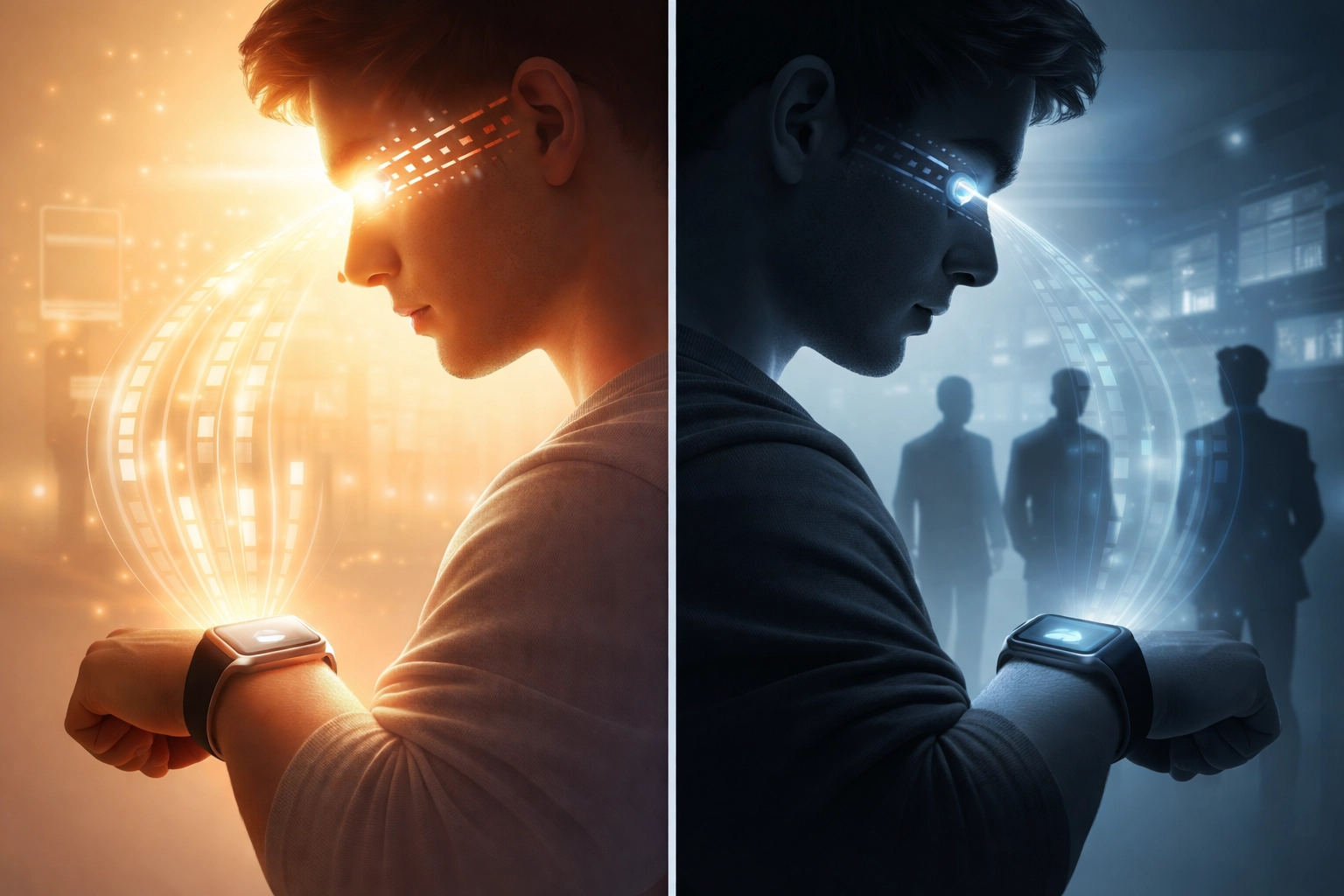
The distinction matters enormously. Ethical wearables empower the user. Surveillance wearables serve the employer. The difference isn’t just philosophical: it’s practical. Who owns the data? Who can access it? What happens if an employee’s stress readings spike during a meeting with their manager?
Healthcare regulations, as researchers have noted, “were established before the advent of many of today’s most innovative medical products” (Patel et al., 2018). We’re operating in a regulatory gap, and neurodivergent employees often bear the cost of that uncertainty.
What Ethical Wearables Could Actually Do
Imagine a wearable designed not just to count your steps, but to track your sensory load throughout the day. It notices when ambient noise levels in your workspace correlate with decreased focus. It recognizes patterns: perhaps you’re most productive in the morning, before the office fills up, or maybe you thrive in the afternoon buzz.
My patents on multi-sensory assistive wearable technology explore exactly this territory (Ruttenberg, 2019). The goal isn’t to monitor employees for employer benefit. It’s to give individuals actionable, personal data that helps them understand their own needs.
Consider three potential applications—simple, practical, actionable:
Sensory regulation alerts that notify users when physiological indicators suggest they’re approaching overload: time to take a break, move to a quieter space, reset before crisis hits (Patel et al., 2018).
Environmental correlation tracking that helps employees identify which workplace conditions support focus and which undermine it: useful evidence for requesting reasonable accommodations (Doyle, 2020).
Personalized pacing tools that support sustainable work patterns rather than pushing productivity at the cost of wellbeing: fewer crashes, fewer burnouts, more stability (Berry et al., 2019).
That’s a tricolon worth aiming for: clarity, control, care.
Making It Work: Practical Recommendations
If your organization is considering wearables for workplace wellness: or if you’re an employee wondering whether these devices could help you: here’s what actually makes the difference between inclusion and intrusion:
1. User ownership of data is non-negotiable.
Employees should have complete control over their health data. Period. Aggregated, anonymized data might inform workplace design, but individual data belongs to individuals.
2. Opt-in, always.
Mandatory wellness wearables aren’t wellness: they’re monitoring. Voluntary participation with genuine choice (not “participate or miss out on benefits”) is essential.
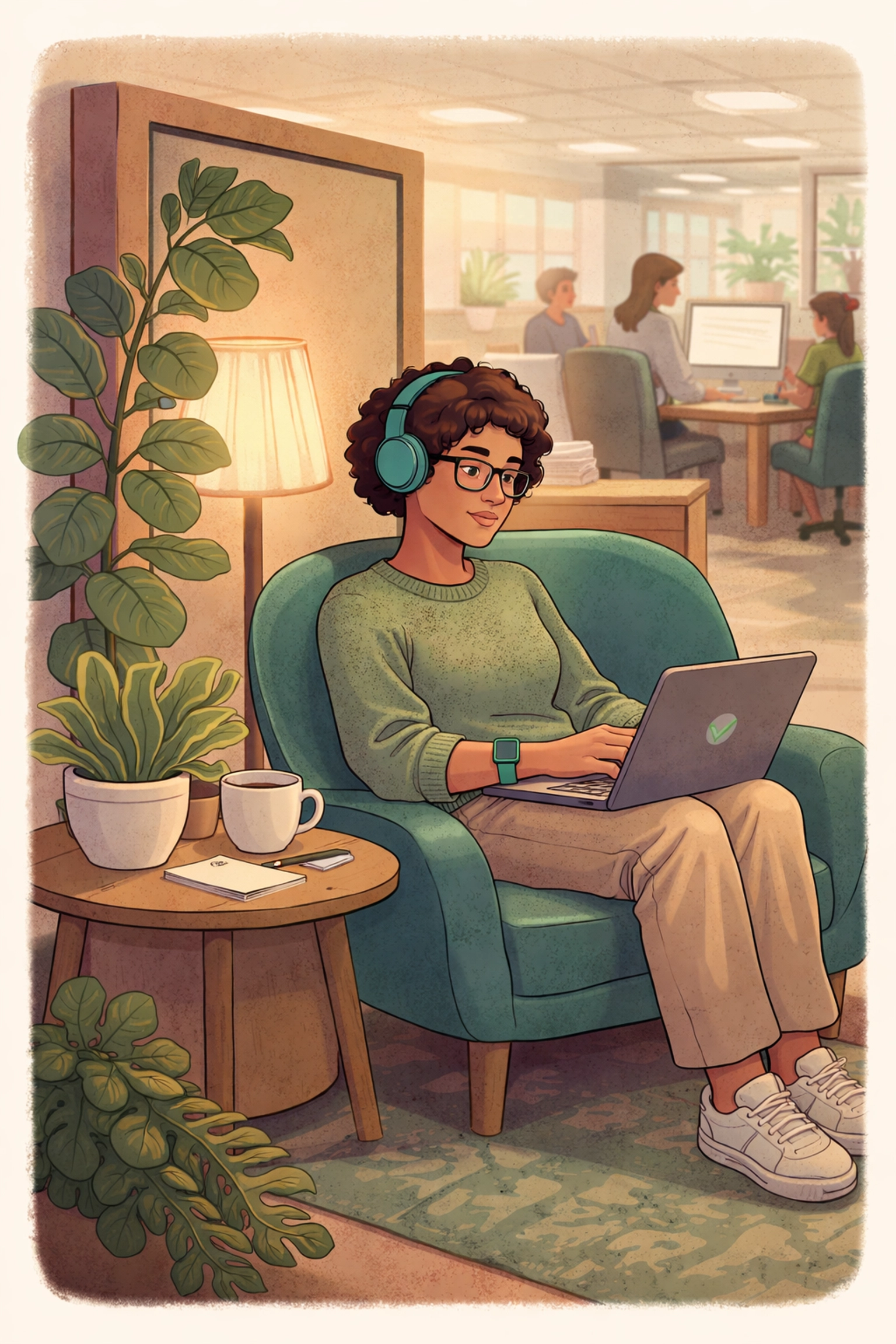
3. Design with neurodivergent users, not just for them.
Too many wellness initiatives are designed by neurotypical teams who’ve never experienced sensory overload. Include neurodivergent voices from the beginning of any wearable wellness program.
4. Complement, don’t replace.
Wearables work best as complements to broader wellness programs rather than standalone solutions (Berry et al., 2019). The device is a tool, not a strategy.
5. Extend access thoughtfully.
Organizations that extend wearables to spouses and domestic partners see increased participation and social support (Patel et al., 2018). Consider how expanding access might benefit employees with disabilities who rely on family support systems.
The Bigger Picture
I’ve spent over three decades researching autism and sensory processing. I’ve written academic papers and opinion pieces for the New York Times and Miami Herald about getting autism science right (Ruttenberg, 2025a, 2025b). And through it all, I’ve learned that technology is never neutral.
Wearables can bridge the inclusion gap: or they can widen it. They can support sensory regulation: or enable surveillance. They can empower neurodivergent employees: or provide new tools for discrimination.
The difference lies entirely in how we choose to design, implement, and regulate these technologies. We have the knowledge. We have the capability. The question is whether we have the will.
Your Next Step
If you’re an employer, audit your current wellness programs. Who’s participating? Who’s not? What barriers—technological, privacy-related, design-based—might be excluding your neurodivergent workforce?
If you’re an employee, consider what data about your own sensory and cognitive patterns might actually help you thrive. Then advocate for tools that put that data in your hands—and only your hands.
The future of workplace wellness isn’t about monitoring everyone the same way. It’s about supporting each person differently, ethically, and with genuine respect for neurodivergent experiences.
Here’s the call to action: pick one policy change this week—opt-in participation, user-owned data, neurodivergent co-design, or an explicit ban on individual-level employer access—and put it in writing. Inclusion doesn’t happen by vibes. It happens by decisions.
About the Author
Dr David Ruttenberg PhD, FRSA, FIoHE, AFHEA, HSRF is a neuroscientist, autism advocate, Fulbright Specialist Awardee, and Senior Research Fellow dedicated to advancing ethical artificial intelligence, neurodiversity accommodation, and transparent science communication. With a background spanning music production to cutting-edge wearable technology, Dr Ruttenberg combines science and compassion to empower individuals and communities to thrive. Inspired daily by their brilliant autistic daughter and family, Dr Ruttenberg strives to break barriers and foster a more inclusive, understanding world.
References
Attig, C., & Franke, T. (2020). Abandonment of personal quantification: A review and empirical study investigating reasons for wearable activity tracking attrition. Computers in Human Behavior, 102, 223–237.
Berry, L. L., Mirabito, A. M., & Berwick, D. M. (2019). A health care agenda for business. Harvard Business Review. https://hbr.org/2019/04/a-health-care-agenda-for-business
Doyle, N. (2020). Neurodiversity at work: A biopsychosocial model and the impact on working adults. British Medical Bulletin, 135(1), 108–125.
Ledger, D., & McCaffrey, D. (2014). Inside wearables: How the science of human behavior change offers the secret to long-term engagement. Endeavour Partners.
Patel, M. S., Asch, D. A., & Volpp, K. G. (2018). Wearable devices as facilitators, not drivers, of health behavior change. JAMA, 313(5), 459–460.
Ruttenberg, D. (2019). Multi-sensory assistive wearable technology [Patent]. U.S. Patent and Trademark Office.
Ruttenberg, D. (2025a). Mitigating sensory sensitivity in autistic adults through wearable technology [Doctoral thesis, University College London]. UCL Discovery. https://discovery.ucl.ac.uk/id/eprint/10210135/
Ruttenberg, D. (2025b). Opinion writing on getting autism science right. The New York Times and Miami Herald.


Comments