The Future of Mental Health: Can Wearables Actually Predict Burnout?

I’m a parent first. Before the publications, before the prototypes, before the pitches.
My wife of 31 years (Suzy Girard at https://tenderwildfires.substack.com/) and my daughter Phoebe have walked this road with me for 23 years. Our daughter is autistic, ADHD, and she lives with epilepsy. We’ve done the therapies, the appointments, the endless forms, the “try this next” plans. We’ve also done the parts nobody ever puts in a glossy brochure: ER stays, long nights in hospital rooms, and the two craniotomies our daughter endured.
Watching seizures up close changes you. It makes time do strange things. It makes you measure “normal” in minutes, not months. It also makes “monitoring” feel less like a feature and more like a lifeline.
So when I talk about wearables, mental health fatigue, and ethical wearables, I’m not playing academic word games. I’m talking about real-world vigilance: monitoring safety, tracking patterns, trying to prevent the next spiral before it starts. In our house, “fatigue” isn’t a buzzword. It’s the cost of being on watch, day after day, night after night.
Here’s the million-dollar question, asked as a parent who’s lived it: can a wearable actually tell you when burnout is coming before it hits like a freight train, or when a body is sliding toward overload before a mind can name it?
The promise is enormous. Imagine a world where a wearable gently nudges you to pause before mental health fatigue spirals out of control. Where sensory sensitivity gets flagged before it becomes overwhelming. Where ethical wearables act like a quiet co-pilot, not a nosy supervisor.
But here’s the reality check. We’re not there yet. Not even close.
What Wearables Can Actually Do Right Now
Let’s give credit where it’s due. Modern wearables have come a long way from step counters. A 2024 systematic review found that wrist-worn biosensors can track physiological data relevant to mental wellbeing, including heart rate variability, sleep patterns, and activity (Haghayegh et al., 2024).
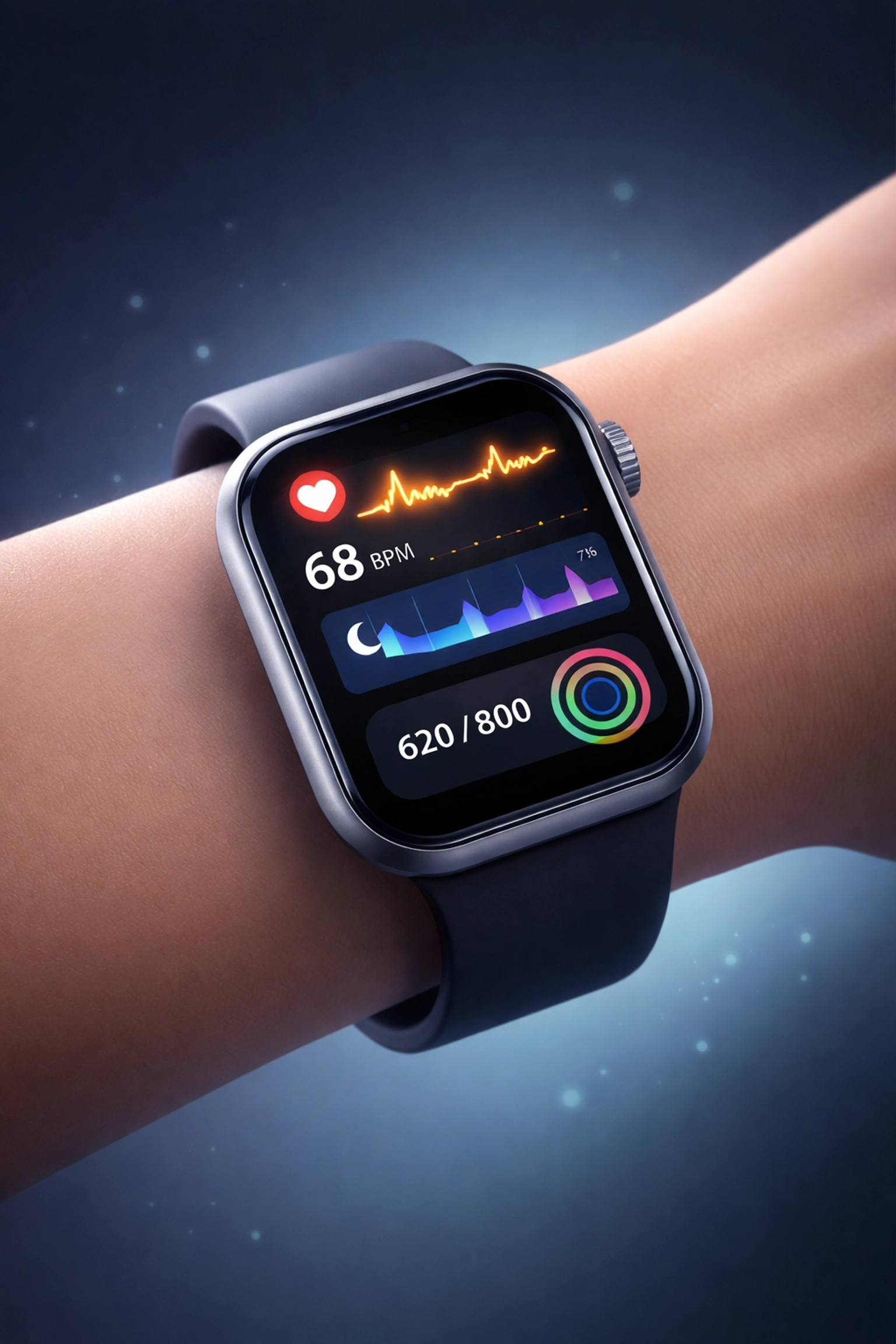
Those correlations can be meaningful. A 2025 study using consumer-grade wearables reported associations between alcohol consumption and reduced REM sleep, and between higher daily stress and reduced deep sleep (Kholghi et al., 2025). Patterns aren’t destiny, but they can be signals.
In my own work, I focus on sensory sensitivity and how physiological markers can reveal distress that people can’t always articulate (Ruttenberg, 2025). When sensory overload builds, the body often reacts first. Sometimes a wearable can catch that signal early.
The SensorAble project explored how machine learning applied to wearable sensor data could help detect subtle changes in wellbeing (Ruttenberg, 2020). Track the trend, spot the sign, intervene in time. That rhyme sticks with me because it’s not cute, it’s survival.
The Gap Between Promise and Prediction
Here’s the antithesis I live with: wearables are powerful, but they are not prophetic. Tech marketing will have you believe a watch can predict everything from heart attacks to happiness. The truth is less shiny: no single physiological measure has been consistently associated with burnout or anxiety across studies (Haghayegh et al., 2024).
Why the disconnect?
First, burnout itself isn’t a universally standardized medical diagnosis. Its symptoms overlap with anxiety and depression, making it hard to “detect” with sensors alone (Maslach & Leiter, 2016). You can’t predict what you can’t define.
Second, the evidence base is still developing: short studies, small samples, inconsistent reporting (Haghayegh et al., 2024).

Third, context is everything. A racing heart rate could mean stress, excitement, coffee, pain, sensory overload. If you’re a parent monitoring a child’s safety, you know this in your bones: numbers without context can soothe, scare, mislead.
Ethical Wearables, Through a Parent Lens
For me, “ethical wearables” isn’t a debate club topic. It’s the difference between support and surveillance, between help and harm (Ruttenberg, 2025). It’s the question of who sees the data, who controls it, and whether it protects the person wearing it or exposes them.
In family life, the stakes can be intensely personal. In workplaces, the stakes can become political fast. Burnout prevention can become burnout surveillance if we aren’t careful (Maslach & Leiter, 2016). Ethical wearables must be voluntary, transparent, user-controlled. Full stop.
Sensory Sensitivity: Hyper, Hypo, and Sensory Seeking
Burnout conversations often ignore sensory load, but sensory load is often the load. In my research, sensory sensitivity is not one thing; it shows up in distinct profiles (Ruttenberg, 2025).
HYPER: sensory input hits too hard, too fast, too much.
HYPO (Under-sensitive): sensory input doesn’t register strongly enough, and people may miss cues or seek stronger input.
The Under-Sensitive Child (Sensory Seekers): seeking intensity on purpose (movement, pressure, sound, novelty) to regulate and feel grounded.
Wearables that only track steps and sleep miss the lived reality of sensory load. SensorAble explored how combining physiology with context and user input can build a richer, more humane picture (Ruttenberg, 2020).
My thesis, Towards technologically enhanced mitigation of autistic adults’ sensory sensitivity experiences and attentional, and mental wellbeing disturbances, sits right in that gap between lab metrics and real life (Ruttenberg, 2025).
Where We Go From Here
Wearables are a genuine frontier in digital health, but they are tools, not oracles (Haghayegh et al., 2024). We need longer studies, better standards, and designs that include neurodivergent people and sensory realities from day one.
And we need to keep the human in the loop. Not just heart rate, not just sleep, not just a score: context, consent, dignity. That’s the tricolon I keep coming back to.
Take the Next Step
If you’re a parent, a leader, or an educator trying to make sense of wearables and mental health: you don’t need more hype, you need a plan.
Visit davidruttenberg.com to explore our work on ethical AI, sensory sensitivity, and assistive wearable technology. If you’re building, buying, or implementing wearable health tech, reach out and let’s make sure it’s ethical, transparent, and genuinely supportive for real families.
About the Author Dr David Ruttenberg PhD, FRSA, FIoHE, AFHEA, HSRF is a neuroscientist, autism advocate, Fulbright Specialist Awardee, and Senior Research Fellow dedicated to advancing ethical artificial intelligence, neurodiversity accommodation, and transparent science communication. With a background spanning music production to cutting-edge wearable technology, Dr Ruttenberg combines science and compassion to empower individuals and communities to thrive. Inspired daily by their brilliant autistic daughter and family, Dr Ruttenberg strives to break barriers and foster a more inclusive, understanding world.
References
Haghayegh, S., Khoshnevis, S., Smolensky, M. H., Diller, K. R., & Castriotta, R. J. (2024). Wearable biosensors for monitoring burnout and related mental health conditions: A systematic review. Journal of Medical Internet Research, 26(3), e48721.
Kholghi, M., Szollosi, A., & Lau, K. (2025). Consumer-grade wearables reveal lifestyle impacts on sleep architecture and nocturnal stress. Digital Health, 11, 1-12.
Maslach, C., & Leiter, M. P. (2016). Understanding the burnout experience: Recent research and its implications for psychiatry. World Psychiatry, 15(2), 103-111.
Ruttenberg, D. (2020). SensorAble: Sensory sensitivity and assistive wearable technology research. University College London.
Ruttenberg, D. (2025). Towards technologically enhanced mitigation of autistic adults’ sensory sensitivity experiences and attentional, and mental wellbeing disturbances [Doctoral thesis, University College London]. https://discovery.ucl.ac.uk/id/eprint/10210135/


Comments