The Hidden Cost of Sensory‑Insensitive AI: When Your Tools Quietly Exhaust Your People

I was sitting in a corporate meeting last month when someone said, "Our new AI productivity tool is amazing, it tracks everything!" The room nodded enthusiastically.
But then I asked one question that changed the conversation: "Does it track the sensory load it's creating?"
Silence.
Here's the thing most organizations miss: your AI tools might be quietly exhausting your people. Not through bad algorithms or broken features, but through something far more insidious, sensory overload. And if you're not thinking about this, you're leaving productivity, retention, and human wellbeing on the table.
The Silent Drain You're Not Measuring
We obsess over engagement metrics, productivity dashboards, and user adoption rates. But we rarely ask: What is this technology doing to people's nervous systems?
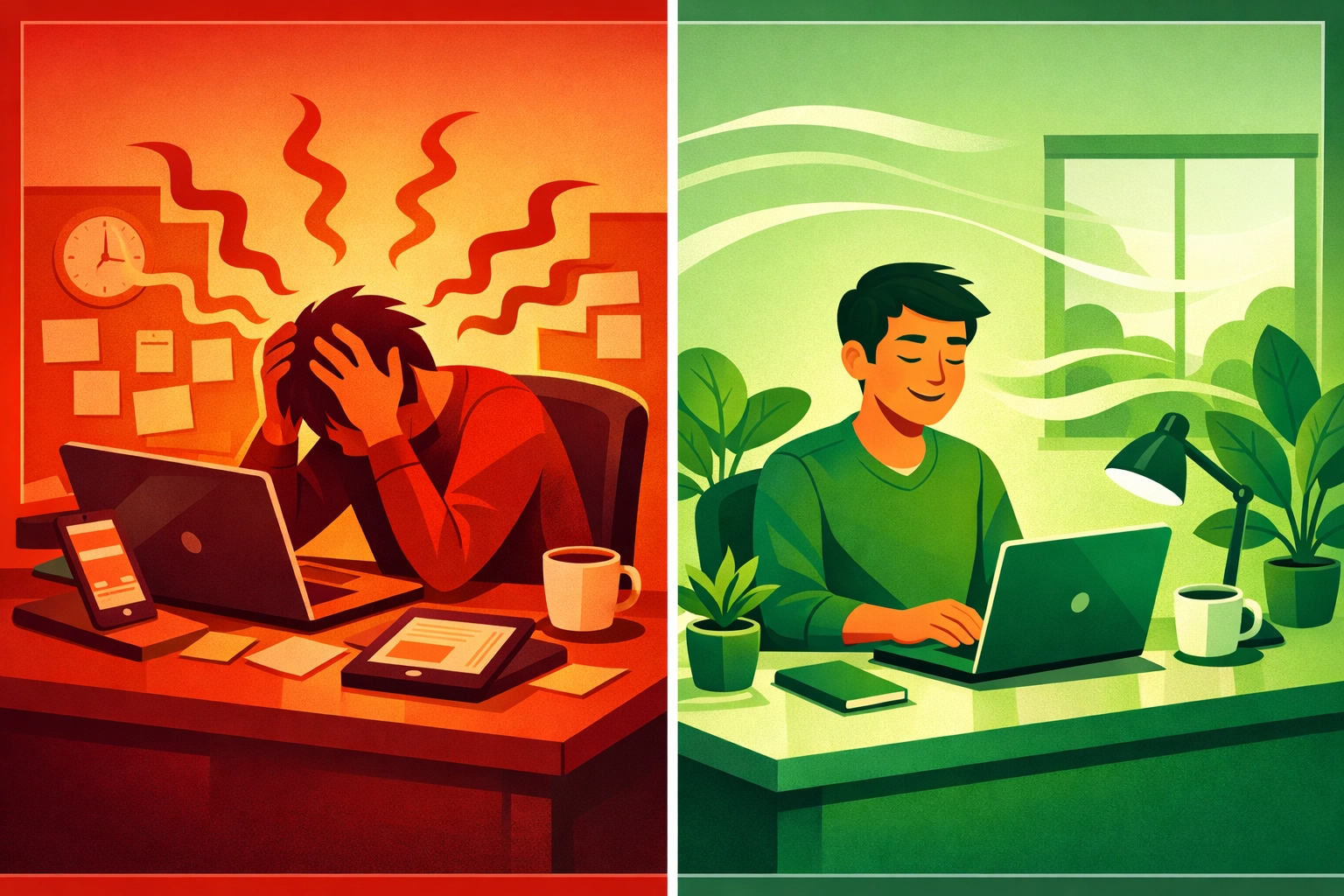
Think about it. Your team opens Slack to 47 unread messages. The notification badge pulses red. A calendar alert chimes. An AI assistant pings with a "friendly reminder." The video call platform auto-joins with your camera on. Background noise from the open office adds another layer. And the fluorescent lights, well, they've been humming all along (Ruttenberg, 2025a).
This isn't just annoying. For neurodivergent employees, and increasingly, for neurotypical ones too, it's sensory quicksand. Each notification, each ping, each unexpected visual change adds to a cumulative load that the brain has to process, filter, and respond to. Eventually, the system overloads (Ruttenberg, 2023).

When AI Doesn't See (or Hear, or Feel)
Most AI systems are trained on neurotypical behavioral patterns. They assume everyone processes information the same way, thrives under the same conditions, and responds predictably to standardized inputs. This creates three massive blindspots:
1. Environmental Ignorance
AI productivity tools track keystrokes, meeting attendance, and response times. But they don't track noise levels, lighting conditions, temperature fluctuations, or the cumulative sensory tax of back-to-back video calls. They measure output while ignoring the environmental factors that make output possible, or impossible (Ruttenberg, 2020).
2. The Attribution Error
When someone's productivity drops, the AI flags it as a performance issue. But what if the real problem is that the office lights are too bright, the notifications are too frequent, or the AI-generated meeting summaries arrive in a sensory-aggressive format? The system blames the person, not the design (Ruttenberg, 2023).
3. The Accommodation Gap
Real-time sensory needs are dynamic. Someone might handle notifications fine on Monday but need them silenced by Wednesday. Traditional accommodations are static, you get them or you don't. AI could provide adaptive, real-time support. Instead, most systems force everyone into the same sensory experience (Ruttenberg, 2025a).
The Real Cost
Let's talk dollars and sense. Employee burnout costs U.S. companies an estimated $322 billion annually in turnover and lost productivity (Moss, 2021). Neurodivergent employees, who represent at least 15-20% of the population, experience workplace burnout at significantly higher rates, often due to unaddressed sensory challenges (Booth & Happé, 2018).
But here's what keeps me up at night: we're building AI systems that amplify these problems at scale.
Every notification strategy optimized for "engagement." Every interface designed for visual density. Every alert system tuned for urgency. These aren't neutral design choices. They're sensory decisions that affect real nervous systems, real cognitive loads, and real people trying to do their best work.
What Sensory‑Aware AI Actually Looks Like
So what's the alternative? I'm not suggesting we abandon AI tools. I'm suggesting we build them with sensory intelligence baked in from day one. Here's what that looks like in practice:
User Control Is Non‑Negotiable
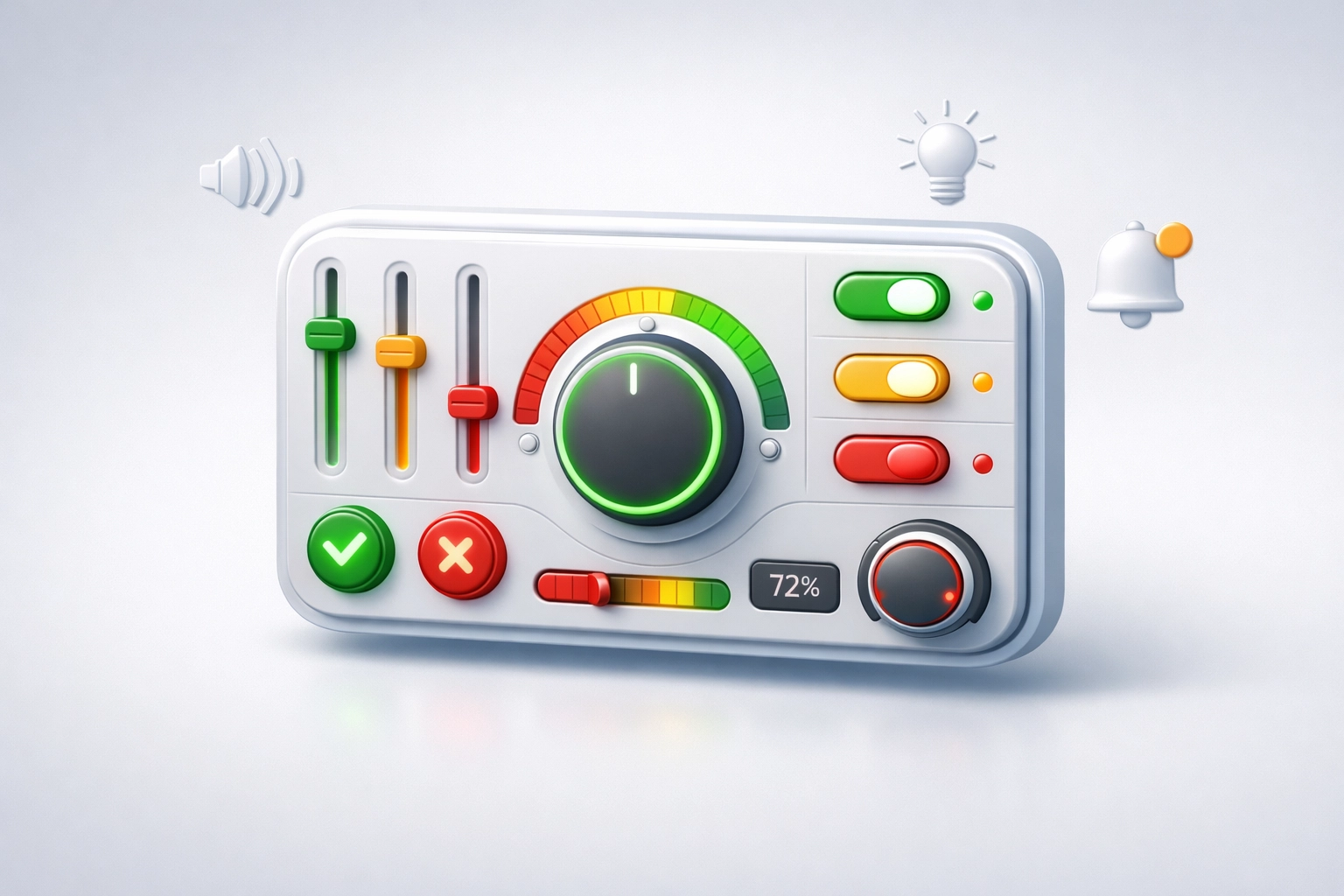
Let people customize notification frequency, alert styles, visual density, and sound profiles. Not buried in settings: front and center. Our daughter, who is autistic, taught us this years ago: control reduces panic; choice prevents overload (Ruttenberg, 2025b).
Transparent Limitations
AI systems should acknowledge what they can't sense. If your productivity AI doesn't account for environmental factors, say so. If it can't detect sensory overload, don't pretend it's tracking "wellbeing." Transparency builds trust; false confidence erodes it (Ruttenberg, 2024).
Co‑Design With Neurodivergent Users
Stop treating accessibility as a compliance checkbox. Bring neurodivergent employees into the design process from the start. Not as test subjects, but as co-creators. The accommodations that help neurodivergent workers often improve the experience for everyone (Ruttenberg, 2023).
Environmental Context
Integrate sensory data where possible. Can your system detect ambient noise levels? Lighting conditions? Time since last break? Screen time accumulation? These aren't invasive metrics: they're protective ones. And they should inform how AI delivers information, not just what it delivers (Ruttenberg, 2020).
A Challenge for Leaders
If you're a CXO, HR leader, or anyone responsible for workplace technology decisions, here's my challenge: audit your AI tools for sensory impact. Ask these questions:
Can employees customize sensory inputs (notifications, alerts, visual density)?
Does the system track environmental context or only individual behavior?
When productivity drops, does the AI consider sensory factors or only performance metrics?
Were neurodivergent users involved in designing this tool?
Can the system provide real-time accommodations, or only static ones?
If the answers don't satisfy you, it's time for a different conversation with your vendors. Because here's the truth: technology that exhausts people isn't productive. It's just expensive.
The Path Forward
We're at a crossroads. We can continue building AI systems that optimize for engagement at the expense of nervous systems. Or we can build technology that respects sensory diversity, provides real-time accommodations, and treats human capacity as something to protect, not just extract.
I know which path I'm choosing. The question is: which one will you choose for your organization?
What sensory challenges have you noticed with workplace AI tools? And if you could change one thing about how these systems are designed, what would it be?
If this resonates, I'd love to hear your experiences. Drop a comment below or reach out: let's keep this conversation going.
About the Author
Dr David Ruttenberg PhD, FRSA, FIoHE, AFHEA, HSRF is a neuroscientist, autism advocate, Fulbright Specialist Awardee, and Senior Research Fellow dedicated to advancing ethical artificial intelligence, neurodiversity accommodation, and transparent science communication. With a background spanning music production to cutting-edge wearable technology, Dr Ruttenberg combines science and compassion to empower individuals and communities to thrive. Inspired daily by their brilliant autistic daughter and family, Dr Ruttenberg strives to break barriers and foster a more inclusive, understanding world.
Connect with Dr Ruttenberg on Substack, LinkedIn, Instagram, and X/Twitter. Or call his assistant Rachel at +1 (561) 979-0496.
References
Booth, T., & Happé, F. (2018). Evidence of reduced global processing in autism spectrum disorder. Journal of Autism and Developmental Disorders, 48(4), 1397–1408. https://doi.org/10.1007/s10803-016-2724-6
Moss, J. (2021). Beyond burned out: How to spot it in your team and what to do about it. Harvard Business Review. https://hbr.org/2021/02/beyond-burned-out
Ruttenberg, D. (2020). SensorAble: Multi-sensory assistive wearable technology for autistic adults. UCL SensorAble Research Project. https://www.davidruttenberg.com
Ruttenberg, D. (2023). Safeguarding autistic adults: A framework for local authorities. Local Government Association. https://www.local.gov.uk
Ruttenberg, D. (2024). Invisible disabilities and workplace accommodations (POSTnote 689). UK Parliament POST. https://post.parliament.uk/research-briefings/post-pn-0689/
Ruttenberg, D. (2025a). Mitigating sensory sensitivity in autistic adults through multi-sensory wearable technology [Doctoral thesis, University College London]. UCL Discovery. https://discovery.ucl.ac.uk/id/eprint/10210135/
Ruttenberg, D. (2025b). The ethics of mental health wearables: Monitoring anxiety without crossing the line. Dr David Ruttenberg Blog. https://www.davidruttenberg.com/blog


Comments