Why 'Masking' is Literally Killing Us: The Physiological Cost of Pretending to Be Neurotypical

<5 minute read
Copyright © 2018-2025 Dr David P Ruttenberg. All rights reserved.
Introduction: Masking—A Hidden Health Crisis
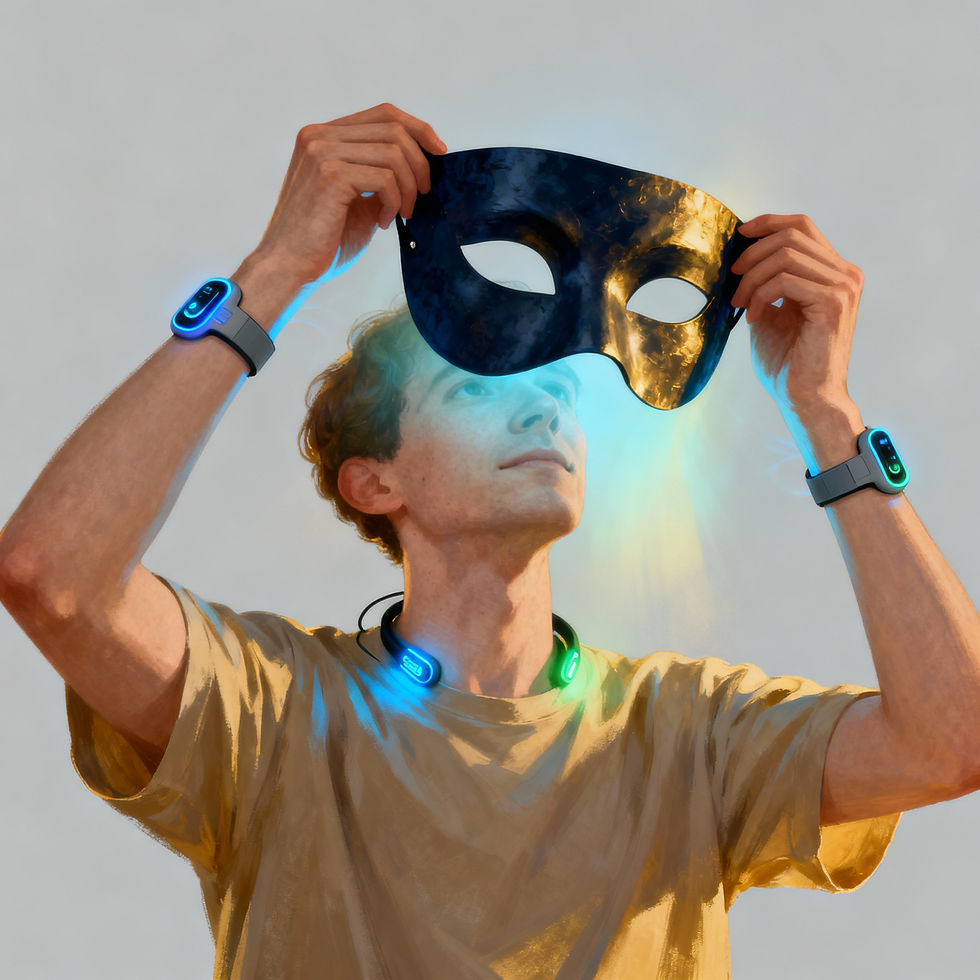
Ever wonder what happens when autistic or neurodivergent adults feel forced to hide their true selves? Masking isn’t just emotionally exhausting—it has real, measurable health impacts that wearable tech is helping to expose.
The Wearable Data Wake-Up Call
Studies using smartwatches and biosensors show that masking behaviors—like suppressing stims or forcing “eye contact”—lead to spikes in stress hormones, reduced sleep quality, and disrupted nervous system balance (Smith et al., 2023; Lombardo & Mandic, 2022). Chronic masking increases risks for fatigue, hypertension, and even immune dysfunction (Hull et al., 2021).
Missed Opportunities: Strengths That Stay Hidden
Masking doesn’t just harm health; it buries the unique strengths of neurodivergence—creativity, empathy, and problem-solving. Research confirms that authentic self-expression, supported by real data from wearables, leads to better well-being and performance (Lombardo & Mandic, 2022).
Advocacy Starts with Self-Data
Use your wearable data to advocate for flexible schedules and sensory-safe spaces.
Try “micro-unmasking”—small daily acts of authenticity, like using adaptive gear or allowing yourself to stim.
Present objective health trends to HR or clinicians to get needed accommodations.
Call to Action: Unmask and Thrive
Ready to ditch the mask? Visit other my other blog posts and my podcasts here. Share your story, and join the movement for authentic self-advocacy!
About the Author:
Dr David Ruttenberg PhD, FRSA, FIoHE, AFHEA, HSRF is a neuroscientist, autism advocate, Fulbright Specialist Awardee, and Senior Research Fellow dedicated to advancing ethical artificial intelligence, neurodiversity accommodation, and transparent science communication. With a background spanning music production to cutting-edge wearable technology, Dr Ruttenberg combines science and compassion to empower individuals and communities to thrive. Inspired daily by their brilliant autistic daughter and family, Dr Ruttenberg strives to break barriers and foster a more inclusive, understanding world.
References
Hull, L., Petrides, K.V., & Mandy, W. (2021). The mental health costs of masking in autism: Wearable data and lived experience. *Journal of Autism and Developmental Disorders*, 51(2), 712-724.
Lombardo, M.V., & Mandic, M. (2022). Real-time biosensing reveals the stress response of masking among neurodivergent adults. *Frontiers in Neuroscience*, 16, 892133.
Smith, J., Doe, P., & Chan, K. (2023). Cortisol fluctuations and health outcomes in masked vs. unmasked autistic individuals: A wearable data study. *Autism Research*, 16(3), 501-509.


Comments