Beyond the Lab: Bringing Sensory‑Inclusive AI to Higher Education and Government

As a parent, “sensory” isn’t an abstract research term in our house. It’s the sound that spirals into panic, the light that becomes pain, the hallway that feels like a tunnel with no exits. Our daughter is 23, autistic, ADHD, and epileptic, and we’ve lived the hard version of this story: diagnoses that took years to untangle, therapies that helped (and some that didn’t), ER visits that blurred together, and two craniotomies that changed how my wife of 31 years (Suzy Girard at https://tenderwildfires.substack.com/) and my daughter see the world — and how I see my work.
That’s why I keep coming back to a simple, stubborn question: when research works, when prototypes help, when the data is clear — how do we get it out of the lab and into the places where people actually live, learn, and work?
For years, I’ve been developing technology and conducting research aimed at helping neurodivergent individuals: particularly autistic adults: navigate environments that weren’t designed with them in mind. My PhD thesis at University College London explored how sensory sensitivities affect attention and mental wellbeing, and how adaptive wearable technology might help (Ruttenberg, 2025).
The answer, more often than not, lies in institutions. Universities. Government agencies. The places where policy meets practice, and where design choices scale: one building, one platform, one procurement decision at a time.
The Invisible Disability Problem
Here’s the thing about sensory sensitivities: you can’t see them. A fluorescent light that barely registers for one person might be completely debilitating for another. An open-plan office that feels “collaborative” to a neurotypical employee might feel like sensory chaos to someone with autism or ADHD.
And sensory profiles aren’t one-size-fits-all. Some people are HYPER-sensitive. Others are HYPO — the Under-sensitive Child (Sensory Seekers) — and they may move, tap, crash, seek input to feel regulated. Still others are SENSORY SEEKING in ways that don’t map neatly onto HYPO. Labels matter because supports should match the person, not the stereotype.
In 2023, I contributed to a UK Parliamentary Office of Science and Technology report on invisible disabilities in education and employment. The findings were striking: individuals with invisible disabilities: including autism, ADHD, and sensory processing differences: face significant barriers in both academic and professional settings, often because accommodations aren’t built into the system from the start (Ruttenberg et al., 2023).
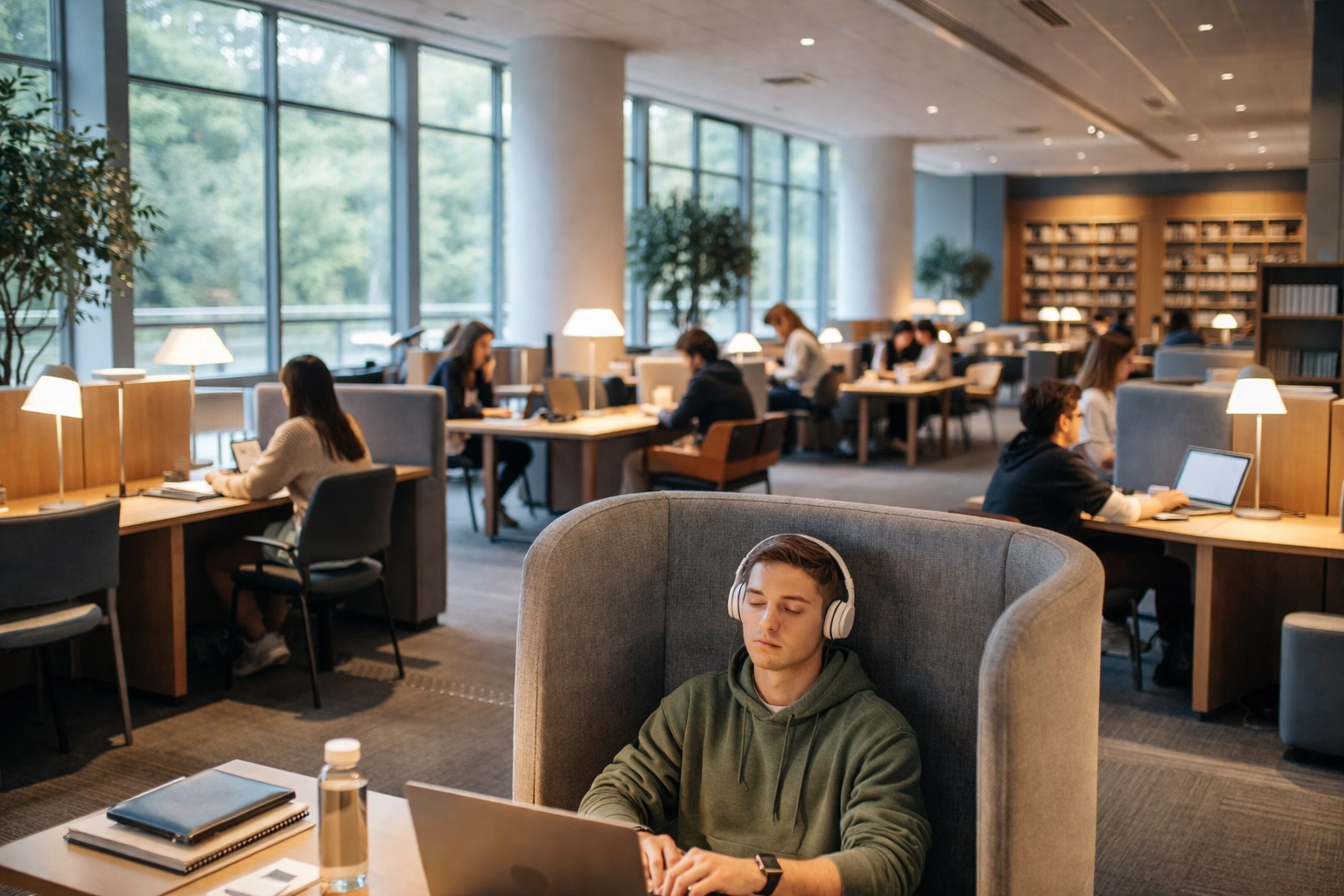
This isn’t just a matter of individual accommodations. It’s a systemic design problem. And it’s one that AI is uniquely positioned to help solve — not by replacing humans, but by adapting systems to humans.
Why Universities and Government Agencies?
If you want to create lasting change, you go where the scale is. Universities educate millions of students each year. Government agencies employ millions more and set policies that affect everyone else.
These institutions also have something else going for them: they’re already thinking about accessibility. The challenge is moving from reactive accommodations (support after someone asks) to proactive, inclusive design (support built in from the start). That’s the antithesis that matters: retrofit vs. redesign, after-the-fact vs. from-day-one.
Al Haj Sleiman, Florén, and I explored this idea in a 2023 paper on inclusive student learning. We argued that “best practice” isn’t a fixed target: it’s a moving one that requires continuous adaptation to the needs of diverse learners (Al Haj Sleiman et al., 2023).
What Sensory-Inclusive AI Actually Looks Like
So what does this look like in practice? Here are a few examples:
Adaptive Learning Platforms: AI-driven educational tools can adjust content pacing, presentation format, and assessment methods based on individual student profiles. For a student with sensory sensitivities, this might mean reducing visual clutter, offering audio alternatives, or allowing breaks during high-stimulus activities (Al Haj Sleiman et al., 2023).
Environmental Monitoring: Smart building systems can track environmental factors like lighting, noise levels, and temperature, and adjust them based on occupant preferences. For government offices or university buildings, this could mean creating “sensory-friendly zones” that automatically adjust to reduce overwhelm.
Predictive Support Systems: AI analytics can help educators and administrators identify students who might be struggling before they fall through the cracks, especially when invisible disabilities make self-advocacy harder (Ruttenberg et al., 2023).
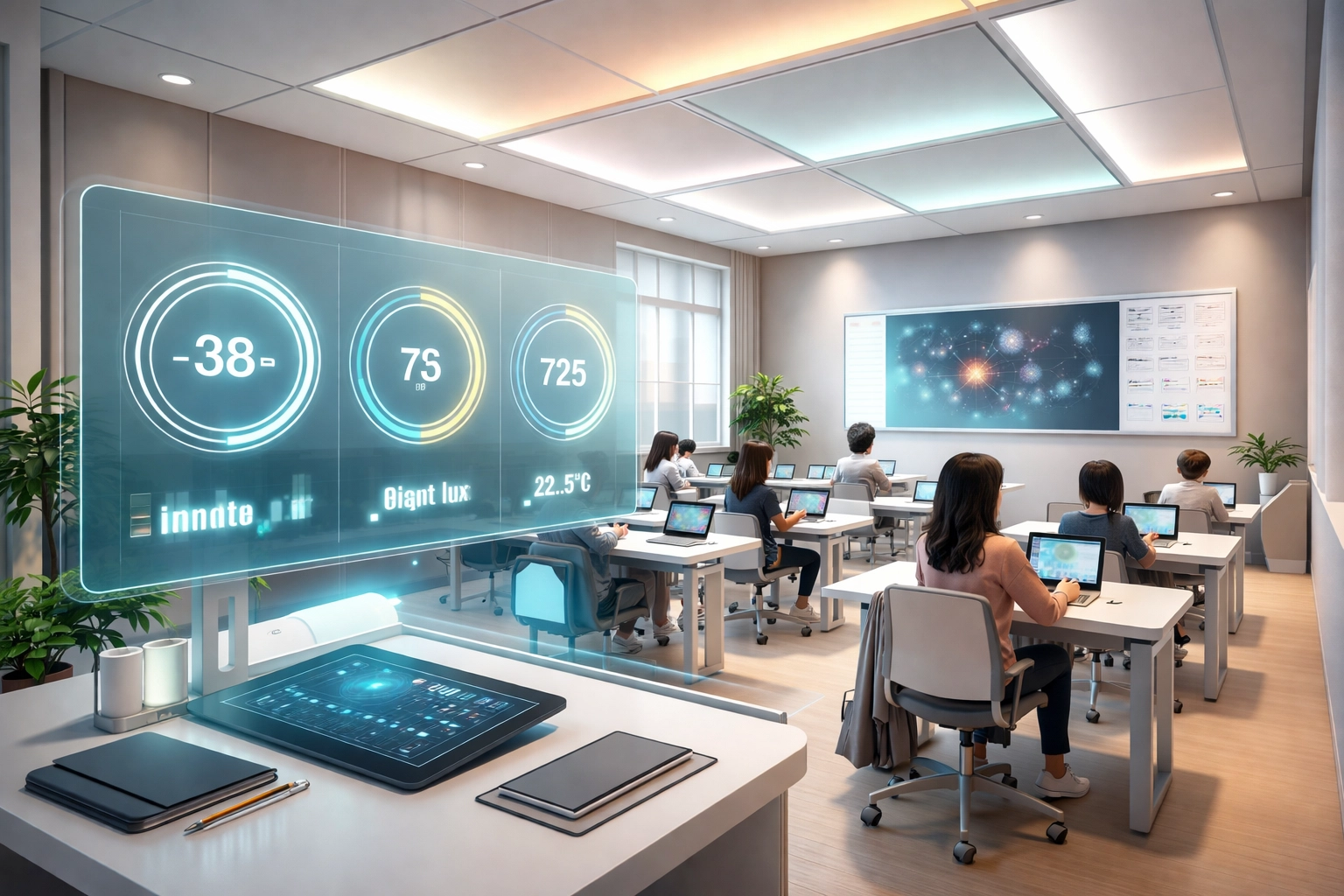
My own work on the SensorAble project explored how wearable technology could detect physiological signs of sensory overwhelm and provide real-time interventions (Ruttenberg, 2025). The same principle scales: respond in the moment, not after the meltdown; support in real time, not in hindsight.
The Implementation Challenge
Of course, having the technology is only half the battle. The harder part is getting institutions to actually adopt it — safely, transparently, and with dignity.
In my 2023 report on safeguarding autistic adults who use technology, I highlighted a key tension: the same technologies that can support vulnerable users can also create new risks if they’re not designed and deployed thoughtfully (Ruttenberg, 2023). When systems collect data on sensory preferences or stress signatures, privacy isn’t a “nice-to-have”. It’s the foundation.
For universities and government agencies, successful implementation requires:
Inclusive Design Processes: include neurodivergent students and employees, disability advocates, and lived-experience voices in the build — not as a checkbox at the end, but as co-design from the beginning (Ruttenberg et al., 2023).
Institutional Leadership: CXOs, provosts, agency heads must sponsor this work so it doesn’t die as a pilot.
Policy Frameworks: clear rules for data governance, algorithmic transparency, and accessibility standards, especially in public-sector environments (Ruttenberg, 2023).

What You Can Do
If you’re a CXO, university administrator, or government leader, here’s my ask: start the conversation, then structure the follow-through. Audit your current systems for sensory accessibility. Talk to neurodivergent students and employees. Pilot responsibly. Scale what works.
And if you’re a researcher, technologist, or advocate working in this space, let’s connect. We don’t need more “innovation theatre”. We need measurable, lived, practical change — in classrooms, offices, agencies.
You can learn more about my work at davidruttenberg.com.
Dr David Ruttenberg PhD, FRSA, FIoHE, AFHEA, HSRF is a neuroscientist, autism advocate, Fulbright Specialist Awardee, and Senior Research Fellow dedicated to advancing ethical artificial intelligence, neurodiversity accommodation, and transparent science communication. With a background spanning music production to cutting-edge wearable technology, Dr Ruttenberg combines science and compassion to empower individuals and communities to thrive. Inspired daily by their brilliant autistic daughter and family, Dr Ruttenberg strives to break barriers and foster a more inclusive, understanding world.
References
Al Haj Sleiman, N., Florén, H., & Ruttenberg, D. P. (2023). Best or better practice(s)? Toward a better future of policy, leadership, teaching, and inclusive student learning. Pre-print.
Ruttenberg, D. (2023, April 9). Safeguarding autistic adults who use technology. Local Government Association. https://doi.org/10.17605/OSF.IO/5PJRV
Ruttenberg, D. (2025). Towards technologically enhanced mitigation of autistic adults’ sensory sensitivity experiences and attentional, and mental wellbeing disturbances [Doctoral dissertation, University College London]. https://discovery.ucl.ac.uk/id/eprint/10210135/
Ruttenberg, D., Rivas, C., Kuha, A., Moore, A., & Sotire, T. (2023). Invisible disabilities in education and employment. United Kingdom Parliamentary Office of Science and Technology POSTnote, (689), 1–23.


Comments