The Neuroscience of Focus: Why Your Team is Fatigued (and How AI Can Help)

Figure 1. The neuroscience of focus: why your team is fatigued (and how AI can help).
Before I say a word about meetings, AI, or productivity, I want to start where I always start: at home.
Our daughter, Phoebe, is 23. She’s autistic, has ADHD, and lives with epilepsy. We’ve done the full circuit: evaluations, therapies, long nights, ER visits that turn into hospital stays, and two craniotomies that rewire your definition of “tired” forever.
So when I say “fatigue,” I don’t mean “a bit sleepy after lunch.” I mean the kind of cognitive depletion that changes decision-making, shrinks patience, and makes the world feel too loud, too bright, too much. In our family, we’ve learned (the hard way) that support isn’t a perk. It’s a necessity.
Now zoom out: your team is tired. Not just “need-another-coffee” tired. We’re talking about the deep, brain-draining exhaustion that turns sharp thinkers into zombies by 2 PM.
Here’s the thing: this isn’t a willpower problem. It’s a neuroscience problem. And understanding the science behind mental fatigue is the first step toward actually fixing it.
Let me walk you through what’s happening in your team’s brains: and how ethical AI might offer some real solutions.
Your Brain is Not a Machine (But We Treat It Like One)
We love to think of the brain as a computer. Plug in some coffee, download some motivation, and boom: productivity. But your brain is more like a garden than a machine. It needs the right conditions to flourish: rest, recovery, and the occasional pruning of distractions.
The prefrontal cortex: your brain’s CEO: handles all the heavy lifting. Planning, decision-making, problem-solving, and staying focused when everything around you is screaming for attention. But here’s the catch: this region depletes with use (Diamond, 2013).
Think of it like a battery that drains faster than your phone at 5% charge. Every decision, every email, every “quick question” chips away at your team’s cognitive reserves.
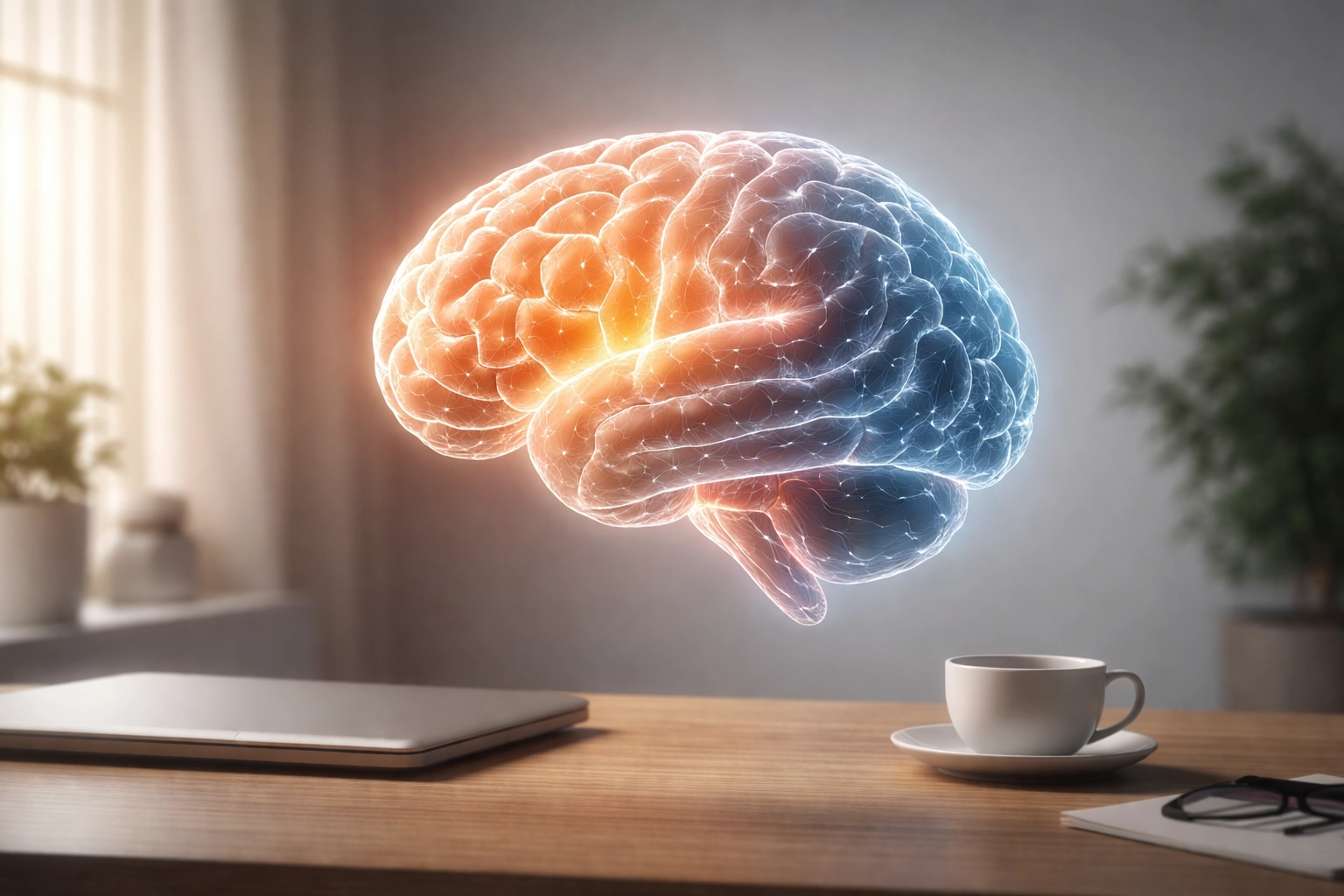
Figure 2. Cognitive energy loss at work: the “battery drain” problem.
The Three Ways Fatigue Sabotages Your Team
Cognitive fatigue doesn’t just make people feel tired. It fundamentally changes how the brain operates. Here’s the tricolon of trouble:
First, decision quality tanks. When fatigued, the brain’s effort-cost calculator goes haywire. The right insula: which tracks how “expensive” mental effort feels: becomes hypersensitive. Suddenly, that strategic report feels like climbing Everest in flip-flops (Blain et al., 2016).
Second, the brain shifts to autopilot. Under fatigue, your team stops thinking analytically and starts reacting automatically. This is the prefrontal cortex waving the white flag and handing control to more primitive brain regions (Lim & Dinges, 2010).
Third, risk tolerance spikes. Fatigued brains focus on short-term gains and ignore long-term consequences. That’s why bad decisions tend to cluster in late-afternoon meetings.
The cruel irony? Performance might not visibly decline even as mental health anxiety fatigue skyrockets internally. Your team could be drowning while appearing to swim just fine.
Why Breaks Aren’t Optional: They’re Biological
Let’s talk about recovery. Research consistently shows that breaks aren’t a luxury: they’re a biological necessity (Tucker, 2003).
The brain needs downtime to consolidate learning, clear metabolic waste, and restore the prefrontal cortex’s depleted resources. Without regular breaks, you’re essentially asking your team to run a marathon without water stations.
But here’s where it gets interesting for those of us in neuroscience consulting: the type of break matters enormously. A “break” spent scrolling through emails isn’t recovery. It’s just switching which part of the brain you’re exhausting.
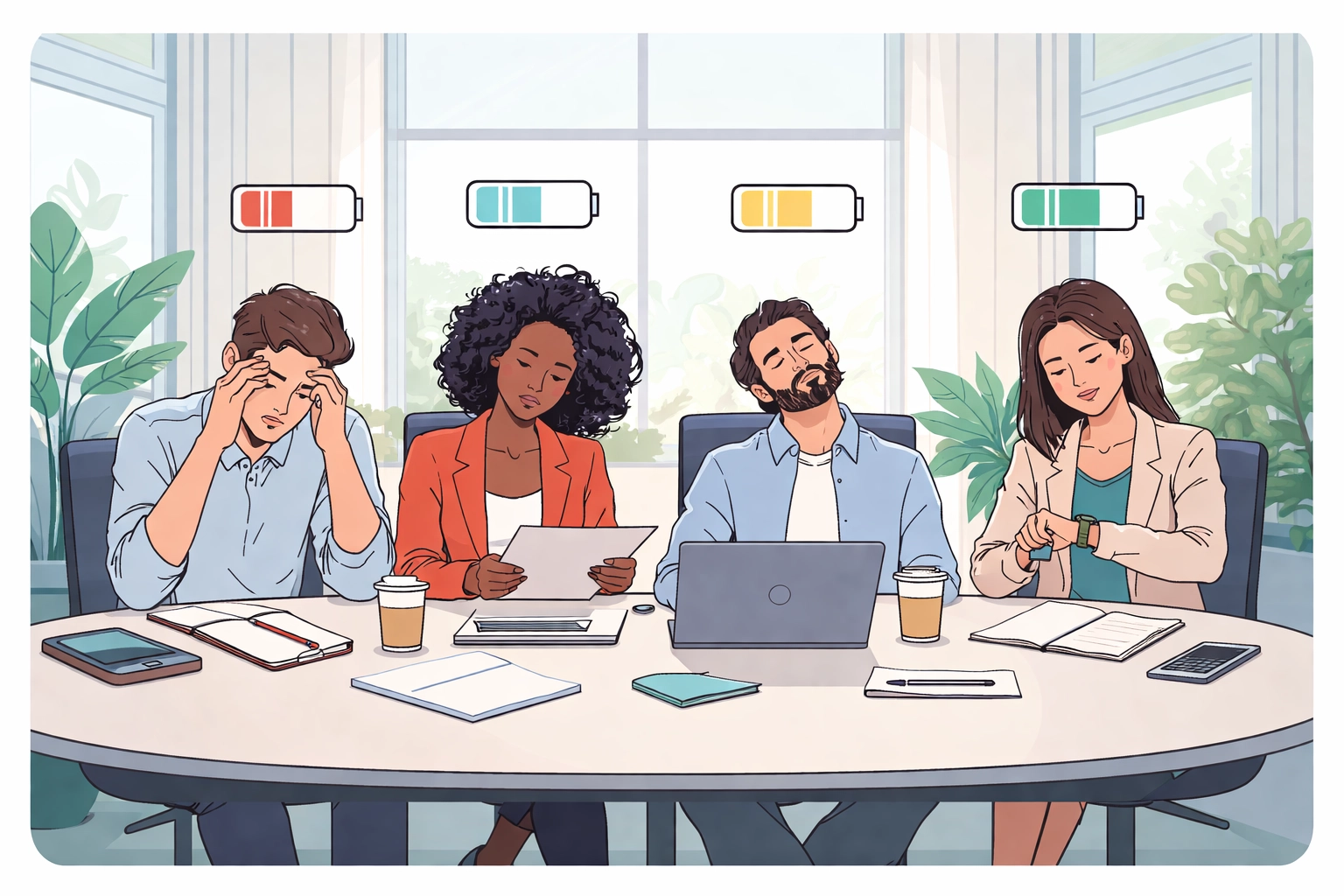
Figure 3. Visible fatigue, invisible cost: why recovery has to be designed in.
Enter Ethical AI: A New Tool for Cognitive Support
So where does AI fit into this picture?
First, let’s be clear about what we’re not talking about. We’re not talking about surveillance software that monitors keystrokes or tracks bathroom breaks. That’s not ethical AI: that’s digital micromanagement dressed in a lab coat.
What we are talking about is AI designed with human wellbeing at its core. Technology that serves people rather than exploiting them.
My research on sensory sensitivity and attentional wellbeing has shown that technology can be designed to support cognitive function rather than deplete it (Ruttenberg, 2025). The same principles apply to workplace AI.
Here’s what ethical AI could look like in practice:
Intelligent scheduling. AI systems that analyze patterns in work output and suggest optimal times for deep work versus routine tasks. Not to squeeze out more productivity, but to align work with natural cognitive rhythms.
Environmental monitoring. Smart systems that track noise levels, lighting, and temperature: factors that significantly impact focus and fatigue: and adjust automatically or alert facilities teams.
Recovery prompts. Gentle, non-intrusive reminders that encourage breaks before cognitive depletion hits critical levels. Think of it as a “low battery” warning for your brain.
Workload balancing. AI that helps managers distribute tasks more equitably, preventing the cognitive overload that leads to burnout in high performers.
The key word in all of this is “ethical.” Any AI system touching mental health anxiety fatigue must be transparent, consent-based, and designed with human oversight built in (Parasuraman & Manzey, 2010).
And if your workforce includes neurodivergent colleagues, it helps to be precise about sensory profiles. “Hyper-sensitive” is the classic “everything is too much” experience: noise, light, textures can overwhelm quickly. “HYPO (Under-sensitive)” is different: the input may not register strongly enough. And “The Under-Sensitive Child (Sensory Seekers)” is different again: seeking isn’t just “low sensitivity,” it’s an active drive for more input, more intensity, more movement. Lumping these together produces policies that look inclusive on paper but fail in practice (Ruttenberg, 2025).

Figure 4. Ethical AI as cognitive support: assist, don’t intrude.
The Human-Centered Approach
Technology alone won’t solve workplace fatigue. But combined with good leadership, sensible policies, and a genuine commitment to employee wellbeing? That’s when things get interesting.
The future of neuroscience consulting isn’t about optimizing humans like they’re algorithms. It’s about understanding the brain well enough to create environments where people can actually thrive.
Your team deserves to work in conditions that support their cognitive health. They deserve leaders who understand that fatigue isn’t laziness: it’s biology. And they deserve technology that helps rather than harms.
What You Can Do Today
Start small. Audit your meeting culture: are you scheduling back-to-back sessions that leave no room for recovery? Look at your office environment: is it optimized for focus or designed for distraction? Talk to your team: when do they feel sharpest, and when do they hit the wall?
And if you’re exploring AI solutions, ask the hard questions. Who benefits from this technology? What data is being collected? Is consent meaningful and ongoing?
Fatigue isn’t a character flaw; it’s a systems outcome. Not “try harder,” but “design better.” Not “more monitoring,” but “more support.” That’s the antithesis leaders need to internalize if they want performance that lasts.
If you want help pressure-testing an ethical AI approach for cognitive workload, neuro-inclusion, and governance, let’s talk. Start with a quick consult: bring one workflow you want to improve, and we’ll map what to measure, what not to measure, and how to do it transparently.
I’d bet your team is worth it.
About Dr. David Ruttenberg
Dr David Ruttenberg PhD, FRSA, FIoHE, AFHEA, HSRF is a neuroscientist, autism advocate, Fulbright Specialist Awardee, and Senior Research Fellow dedicated to advancing ethical artificial intelligence, neurodiversity accommodation, and transparent science communication. With a background spanning music production to cutting-edge wearable technology, Dr Ruttenberg combines science and compassion to empower individuals and communities to thrive. Inspired daily by their brilliant autistic daughter and family, Dr Ruttenberg strives to break barriers and foster a more inclusive, understanding world.
References
Blain, B., Hollard, G., & Pessiglione, M. (2016). Neural mechanisms underlying the impact of daylong cognitive work on economic decisions. Proceedings of the National Academy of Sciences, 113(25), 6967-6972.
Diamond, A. (2013). Executive functions. Annual Review of Psychology, 64, 135-168.
Lim, J., & Dinges, D. F. (2010). A meta-analysis of the impact of short-term sleep deprivation on cognitive variables. Psychological Bulletin, 136(3), 375-389.
Parasuraman, R., & Manzey, D. H. (2010). Complacency and bias in human use of automation: An attentional integration. Human Factors, 52(3), 381-410.
Ruttenberg, D. (2025). Towards technologically enhanced mitigation of autistic adults’ sensory sensitivity experiences and attentional, and mental wellbeing disturbances [Doctoral thesis, University College London]. https://discovery.ucl.ac.uk/id/eprint/10210135/
Tucker, P. (2003). The impact of rest breaks upon accident risk, fatigue and performance: A review. Work & Stress, 17(2), 123-137.


Comments