The Future of Neuro-Inclusion: How Ethical AI Transforms the Modern Workplace
- David Ruttenberg
- 4 days ago
- 5 min read

We've spent this series talking about sensory sensitivity, attention, mental health, and the ethics of wearable tech. Now it's time to bring it all together. The future of work isn't just about productivity hacks or office perks. It's about building systems that actually work for how people think.
And that means embracing neuro-inclusion: not as a checkbox, but as a design principle.
What Is Neuro-Inclusion, Really?
Neuro-inclusion goes beyond simply hiring neurodivergent employees and hoping for the best. It means proactively designing workplace systems, policies, and technologies that remove barriers before they become problems (Ruttenberg et al., 2023).
Think about it this way: instead of asking someone to request accommodations after they're already struggling, neuro-inclusive workplaces build flexibility into the baseline. Advance meeting agendas. Quiet workspaces. Outcome-based evaluation instead of face-time metrics. Multiple communication formats.
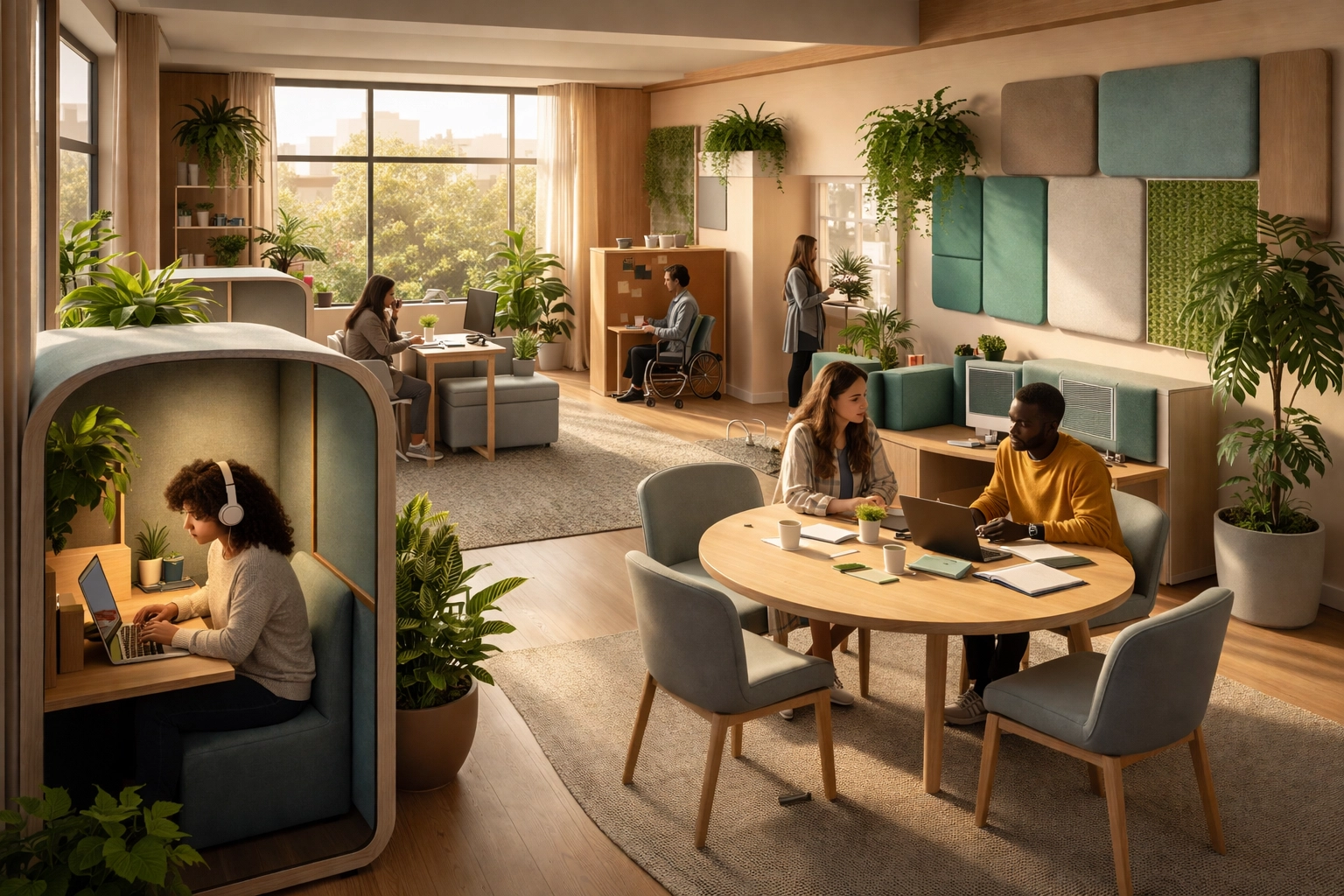
These aren't "special" accommodations. They're just good design. And when AI enters the picture, we have an opportunity to scale these practices in ways that weren't possible before.
Where Ethical AI Fits In
Here's where things get interesting. AI can either reinforce old biases or help us build something better. The difference comes down to how we design and deploy it.
Ethical AI in the neuro-inclusive workplace means technology that:
Adapts to individual needs without requiring disclosure of diagnosis
Protects privacy while still providing meaningful support
Empowers users rather than surveilling them
Reduces cognitive load instead of adding to it
My research on multi-sensory assistive wearable technology demonstrates how this can work in practice. The patented system uses AI to detect environmental stressors: like sudden noise changes or lighting shifts: and provides personalized sensory relief in real time (Ruttenberg, 2025a). The key? Users stay in control. The technology responds to their needs without broadcasting those needs to everyone in the room.
From Accommodation to Universal Design
The old model of workplace accessibility treated accommodations as exceptions. Someone discloses a disability, HR gets involved, and maybe: eventually: they get a standing desk or noise-canceling headphones.
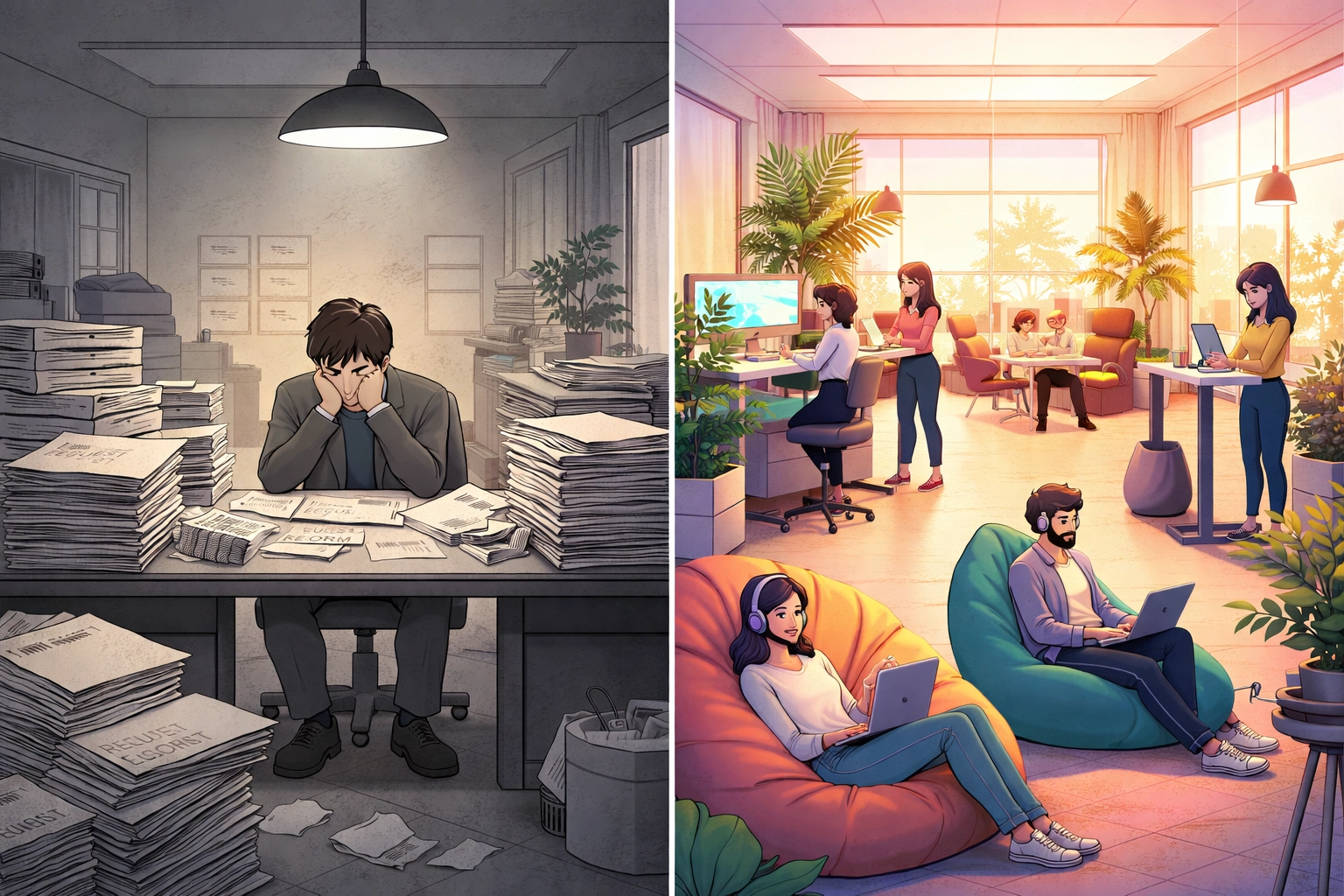
That model is broken. It puts the burden on individuals to out themselves, navigate bureaucracy, and often advocate repeatedly for basic support. Meanwhile, plenty of people who could benefit from these tools never ask because of stigma, fear, or simply not knowing they qualify.
Universal design flips this script. Instead of retrofitting accommodations for individuals, you build flexibility into the system from the start. Everyone benefits from clear communication, sensory-friendly spaces, and flexible scheduling: not just neurodivergent employees (Al Haj Sleiman et al., 2023).
AI accelerates this shift. Imagine office systems that automatically adjust lighting based on occupancy and time of day. Meeting platforms that offer real-time transcription and visual summaries as standard features. Wearables that help anyone manage stress, not just those with a clinical diagnosis.
The Policy Piece
Technology alone won't fix systemic exclusion. We also need policy frameworks that hold organizations accountable.
The UK Parliamentary Office of Science and Technology's POSTnote on invisible disabilities laid out the stakes clearly: neurodivergent individuals face significant barriers in education and employment, and these barriers are often invisible to those designing systems (Ruttenberg et al., 2023). Without intentional policy interventions, even well-meaning organizations reproduce exclusion.
What does good policy look like? It includes:
Clear guidelines for ethical AI deployment in HR and workplace management
Transparency requirements so employees know how AI systems affect them
Anti-discrimination protections that explicitly cover neurological differences
Funding for research into neuro-inclusive technology

This isn't just about compliance. Organizations that get neuro-inclusion right see measurable benefits: improved innovation, better problem-solving, higher retention, and access to cognitive diversity that competitors miss (Ruttenberg, 2025b).
Leadership Matters
Policy sets the floor. Leadership determines whether organizations actually walk the talk.
Research on inclusive practices in education and employment shows that top-down commitment makes or breaks neuro-inclusion initiatives (Al Haj Sleiman et al., 2023). When leaders model flexibility, prioritize psychological safety, and invest in inclusive technology, it signals to everyone that these values are real: not just PR talking points.
Conversely, when leadership treats neuro-inclusion as someone else's problem: usually HR's: initiatives stall. Employees learn that asking for support is risky. And the organization misses out on the very perspectives it claims to value.
Safeguarding in the Age of AI
One more piece of this puzzle: as AI becomes more embedded in workplace systems, safeguarding becomes critical.
Neurodivergent adults are already at higher risk of exploitation and harm in digital environments (Ruttenberg, 2023). AI systems that collect behavioral data, monitor productivity, or make hiring decisions can amplify these risks if not designed carefully.
Ethical AI means building in safeguards from the start:
Data minimization: Collect only what's necessary
Purpose limitation: Use data only for stated purposes
User control: Let people access, correct, and delete their data
Algorithmic auditing: Regularly check for bias and unintended consequences
These aren't optional extras. They're the foundation of any AI system that claims to support neuro-inclusion.
What Comes Next
The future of neuro-inclusion isn't some far-off dream. The technology exists. The research is there. The policy frameworks are emerging.
What's missing is will: the collective decision by organizations, policymakers, and technologists to prioritize inclusion over convenience.
If you've followed this series, you've seen the evidence. Sensory-aware AI can reduce distress. Ethical wearables can support mental health without surveillance. Universal design benefits everyone.

Now it's time to build it.
Want to learn more about ethical, neuro-inclusive technology? Visit www.davidruttenberg.com to explore my research and connect on how we can design better systems together.
Dr David Ruttenberg PhD, FRSA, FIoHE, AFHEA, HSRF is a neuroscientist, autism advocate, Fulbright Specialist Awardee, and Senior Research Fellow dedicated to advancing ethical artificial intelligence, neurodiversity accommodation, and transparent science communication. With a background spanning music production to cutting-edge wearable technology, Dr Ruttenberg combines science and compassion to empower individuals and communities to thrive. Inspired daily by their brilliant autistic daughter and family, Dr Ruttenberg strives to break barriers and foster a more inclusive, understanding world.
#NeuroInclusion #EthicalAI #NeurodiversityAtWork #AssistiveTechnology #InclusiveDesign #FutureOfWork #SensoryProcessing #WorkplaceInclusion #AIethics #UniversalDesign
References
Al Haj Sleiman, N., Florén, H., & Ruttenberg, D. P. (2023). Best or better practice(s)? Toward a better future of policy, leadership, teaching, and inclusive student learning [Pre-print].
Ruttenberg, D. (2023, April 9). Safeguarding autistic adults who use technology. Local Government Association. https://doi.org/10.17605/OSF.IO/5PJRV
Ruttenberg, D. (2025a). Multi-sensory, assistive wearable technology, and method of providing sensory relief using same (U.S. Patent No. US-12,208,213 B2). U.S. Patent and Trademark Office.
Ruttenberg, D. (2025b). Towards technologically enhanced mitigation of autistic adults' sensory sensitivity experiences and attentional, and mental wellbeing disturbances [Doctoral thesis, University College London]. https://doi.org/10.13140/RG.2.2.16142.27201
Ruttenberg, D., Rivas, C., Kuha, A., Moore, A., & Sotire, T. (2023). Invisible disabilities in education and employment. United Kingdom Parliamentary Office of Science and Technology POSTnote, (689), 1–23.
Comments