The Hidden Cost of Sensory-Insensitive AI: How Your Tech Might Be Driving Employee Fatigue

I’m writing this first as a parent.
Our daughter, Phoebe, is 23. She’s autistic, ADHD, and epileptic. Our family has done the whole tour: diagnoses, therapies, ER visits, and two craniotomies. So when I say “sensory load” isn’t a buzzword, I mean it in the most literal, nervous-system way possible.
Now zoom out to work.
You have invested millions in AI-powered tools to boost productivity. Your dashboards are sleek. Your notifications are instant. Your analytics are real-time. But here is the question nobody is asking: Is your technology actually exhausting your workforce?
For a significant portion of your employees, the answer is yes.
The Sensory Elephant in the Room
When we talk about workplace fatigue, we usually point to obvious culprits: heavy workloads, poor management, or lack of work-life balance. But there is a hidden driver that most organizations completely overlook: the sensory experience of the technology itself.
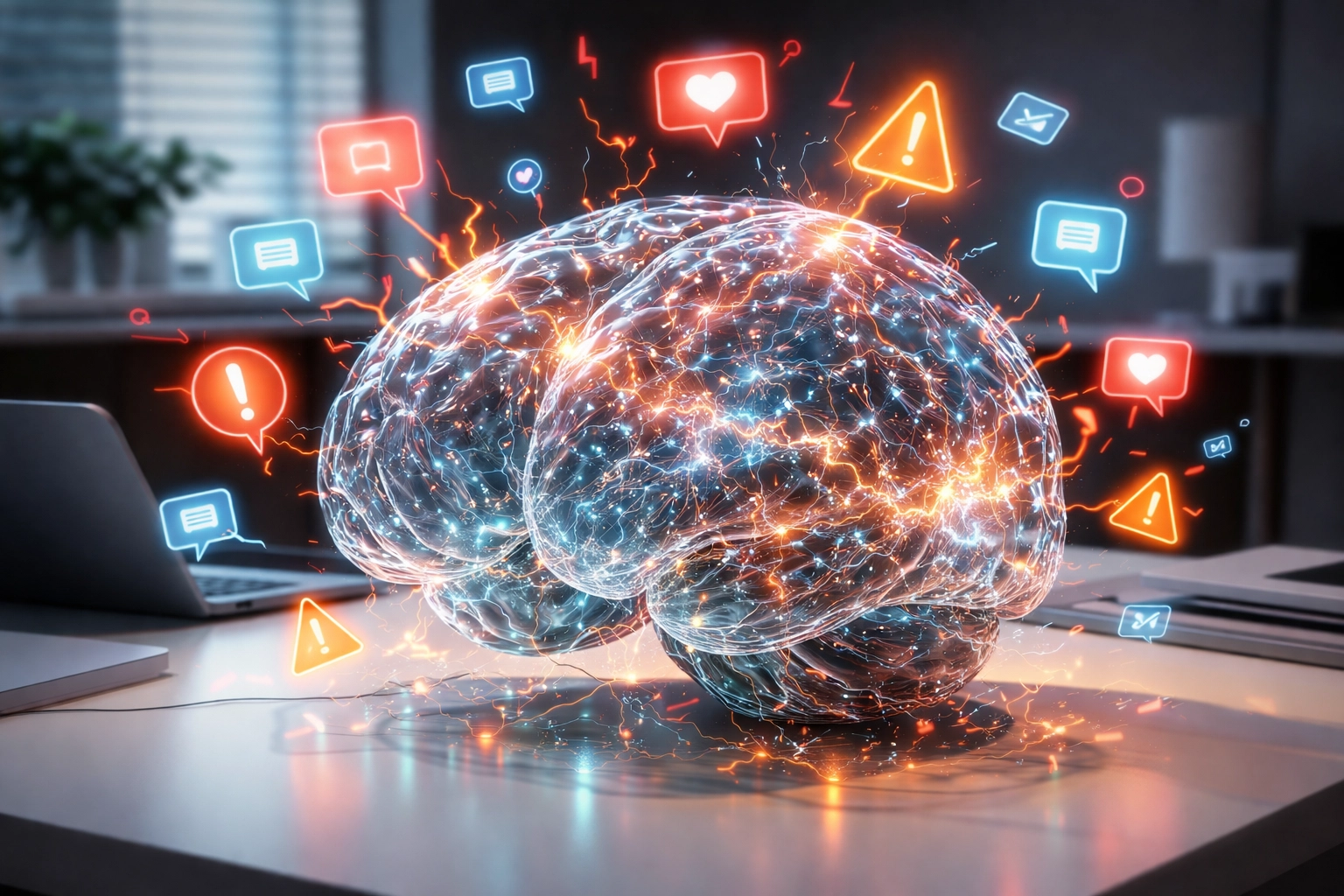
Every ping, flash, pop-up, and auto-playing video in your AI-powered tools creates a sensory event. For neurotypical employees, these micro-interruptions are annoying. For neurodivergent employees and those with sensory sensitivities, they can be genuinely debilitating (Ruttenberg, 2025).
Research indicates that higher awareness of AI in the workplace correlates with emotional exhaustion among employees, primarily through mechanisms of job insecurity and work-life balance disruption (Yam et al., 2023). But what the research often misses is the cumulative sensory toll these systems take on the nervous system itself.
Who Are We Talking About?
When I say “sensory-sensitive employees,” I am not describing a tiny edge case. Consider these numbers:
Approximately 15-20% of the population identifies as highly sensitive (Aron & Aron, 1997)
An estimated 15-20% of adults are neurodivergent, including those with ADHD, autism, dyslexia, and other neurological differences
Virtually everyone experiences sensory overload under the right (or wrong) conditions
That means at least one in five of your employees is likely struggling with technology that was never designed with their nervous system in mind. And here is the kicker: most of them will never tell you. They will just quietly burn out, disengage, leave.
Not because they’re “too sensitive.” Not because they’re not “resilient.” But because the system is loud, bright, busy: and their nervous system is paying the bill.
How AI Tools Get Sensory Design Wrong
Modern AI-driven workplace tools are optimized for engagement, not wellbeing. The same design principles that make social media addictive have found their way into your enterprise software. Let me break down the most common offenders:
Notification Overload
AI-powered tools love to notify you. Slack messages. Teams alerts. Email summaries. Calendar reminders. Each notification triggers a small stress response in the brain. For sensory-sensitive individuals, this constant bombardment keeps the nervous system in a state of low-grade fight-or-flight all day long (Bakker & Demerouti, 2017).
Visual Clutter
Dashboards packed with moving widgets, flashing indicators, and color-coded alerts might look impressive in a demo. In practice, they create visual chaos that forces the brain to work overtime just to filter out irrelevant information. This is especially taxing for employees with ADHD or autism, who may already struggle with attention regulation (Leekam et al., 2007).
Unpredictable Interface Changes
AI systems that “learn” and adapt can be a nightmare for sensory-sensitive users. When buttons move, menus reorganize, or features appear and disappear based on algorithmic predictions, it strips away the predictability that many neurodivergent employees need to function efficiently.
Audio Intrusions
Auto-playing videos in training platforms. Chimes for every completed task. Voice assistants that activate unexpectedly. For employees with auditory sensitivities, these sounds are not minor inconveniences: they are neurological disruptions.
The Business Cost You Are Not Measuring
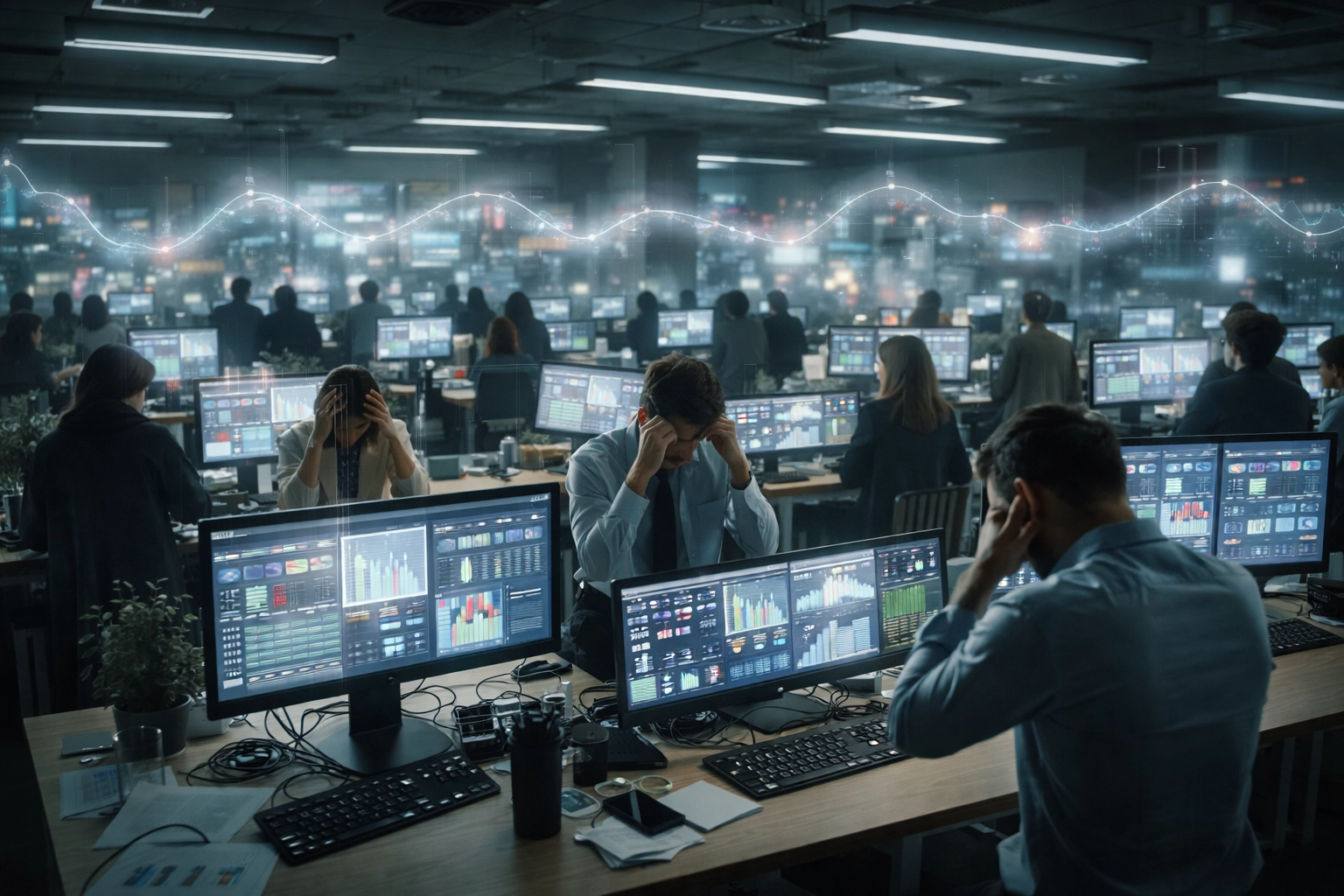
Here is what makes this a C-suite problem: sensory fatigue does not show up in your standard HR metrics. It looks like:
Decreased productivity in the afternoon (when sensory load has accumulated)
Increased sick days and “mental health days”
Higher turnover among high-performing but sensitive employees
Reduced creativity and problem-solving capacity
Quiet quitting and disengagement
Research on occupational stress has consistently shown that environmental factors: including sensory elements: play a significant role in employee burnout and turnover intention (Bakker & Demerouti, 2017). Yet most organizations continue to implement AI tools without any consideration of their sensory impact.
The Good News: This Is Fixable
The solution is not to abandon AI. It is to design and implement AI with sensory intelligence. Here is what that looks like in practice:
Conduct a Sensory Audit
Before rolling out any new AI tool, evaluate its sensory footprint. How many notifications does it generate? What is the visual complexity of its interface? Does it include audio elements? Can these features be customized or disabled?
Prioritize Customization
The best AI tools allow users to control their sensory experience. Look for platforms that offer notification batching, dark mode, reduced motion settings, and granular control over alerts and sounds.
Design for Predictability
When AI systems adapt and change, they should do so transparently and gradually. Users should be able to preview changes before they take effect and revert to previous configurations if needed.
Train Your Teams
Most employees do not know they can customize their tools: or that they should. Include sensory self-advocacy in your onboarding and wellness programs. Normalize the conversation about sensory needs.
And if you want a simple mantra your teams can remember, make it a tricolon: fewer pings, fewer flashes, fewer surprises.
Consult the Experts
This is where specialized neuroscience consulting becomes invaluable. Understanding the intersection of AI design, sensory processing, and workplace performance requires expertise that most IT and HR departments simply do not have in-house (Aron & Aron, 1997).
Building a Neuro-Inclusive AI Strategy
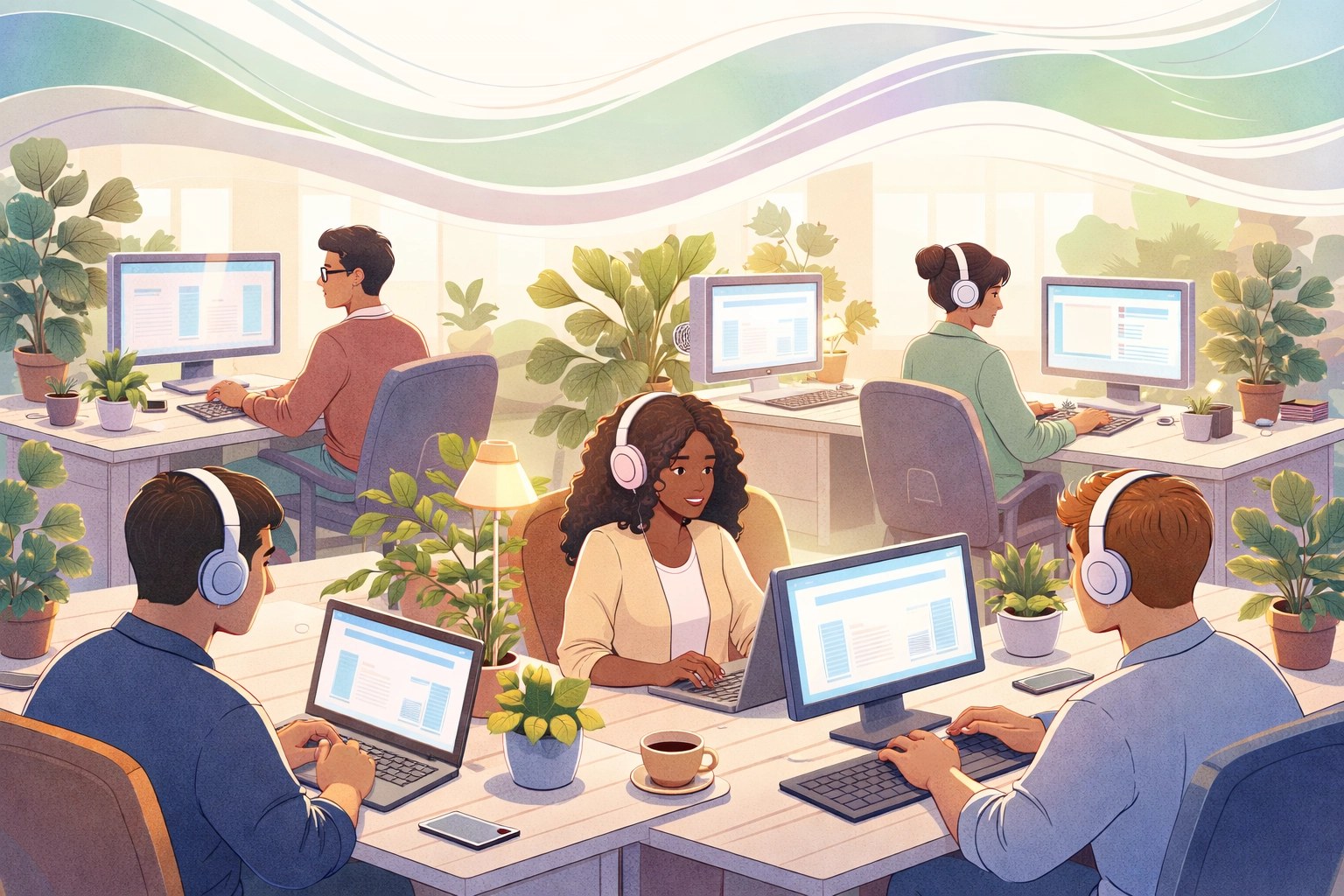
The organizations that will thrive in the next decade are those that recognize a fundamental truth: your technology is not separate from your culture. Every tool you deploy sends a message about who belongs and who does not.
Sensory-insensitive AI tells a significant portion of your workforce that their needs do not matter. Sensory-intelligent AI tells them they are valued, understood, and supported.
Which message is your technology sending?
Ready to Find Out?
If you are a CXO or HR leader who suspects your AI tools might be contributing to employee fatigue, I would love to help you investigate. My consultancy specializes in evaluating workplace technology through a neuroscience lens: identifying hidden sensory stressors and recommending practical, human-centered solutions.
If you want your AI to speed people up, don’t let your interface slow their nervous systems down. That’s the antithesis worth designing for.
Reach out today to schedule a conversation about building AI systems that work for every brain in your organization.
Dr David Ruttenberg PhD, FRSA, FIoHE, AFHEA, HSRF is a neuroscientist, autism advocate, Fulbright Specialist Awardee, and Senior Research Fellow dedicated to advancing ethical artificial intelligence, neurodiversity accommodation, and transparent science communication. With a background spanning music production to cutting-edge wearable technology, Dr Ruttenberg combines science and compassion to empower individuals and communities to thrive. Inspired daily by their brilliant autistic daughter and family, Dr Ruttenberg strives to break barriers and foster a more inclusive, understanding world.
References
Aron, E. N., & Aron, A. (1997). Sensory-processing sensitivity and its relation to introversion and emotionality. Journal of Personality and Social Psychology, 73(2), 345-368.
Bakker, A. B., & Demerouti, E. (2017). Job demands-resources theory: Taking stock and looking forward. Journal of Occupational Health Psychology, 22(3), 273-285.
Leekam, S. R., Nieto, C., Libby, S. J., Wing, L., & Gould, J. (2007). Describing the sensory abnormalities of children and adults with autism. Journal of Autism and Developmental Disorders, 37(5), 894-910.
Ruttenberg, D. (2025). Neuro-inclusivity in the digital age: Sensory sensitivity and AI design. Ruttenberg Consulting.
Yam, K. C., Tang, P. M., Jackson, J. C., Su, R., & Gray, K. (2023). The rise of robots increases job insecurity and maladaptive workplace behaviors: Multimethod evidence. Journal of Applied Psychology, 108(5), 850-870.


Comments